A1
+500 exercises


Publications found: 92
Keine Artikel für diese Filter gefunden.
 AI-generated image
Clip thinking and modern learning: How deutsch-vorbereitung.com applies 21st-century didactic principles – structured, visual, and effective.
 2122
2122
 0
0
 0
0
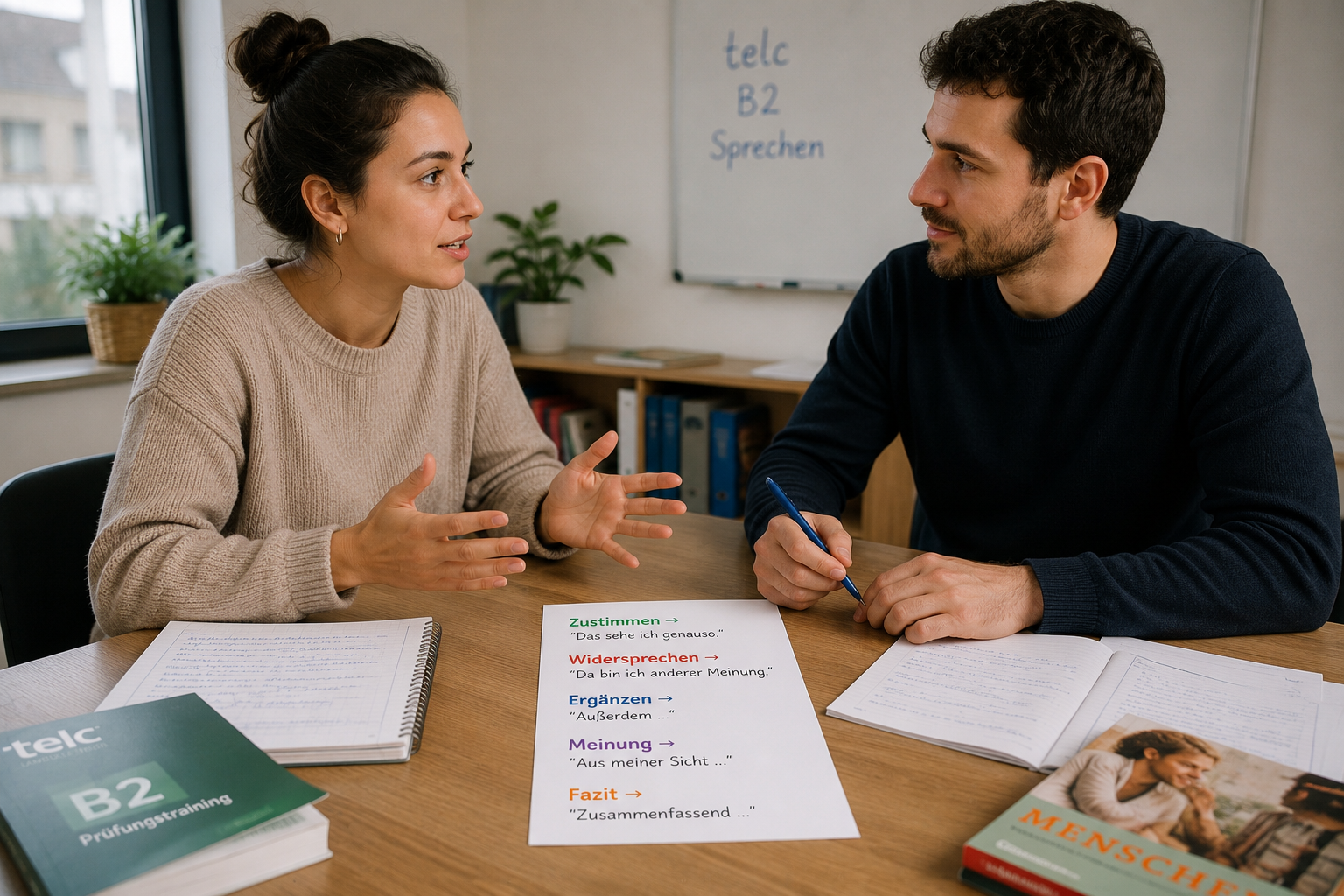 AI-generated image
Practical cheat sheet of useful phrases for the oral part of the B2 exam: agreement, disagreement, partial agreement, expanding arguments, concluding the discussion. Includes examples, exercises, and a checklist.
10228
0
0
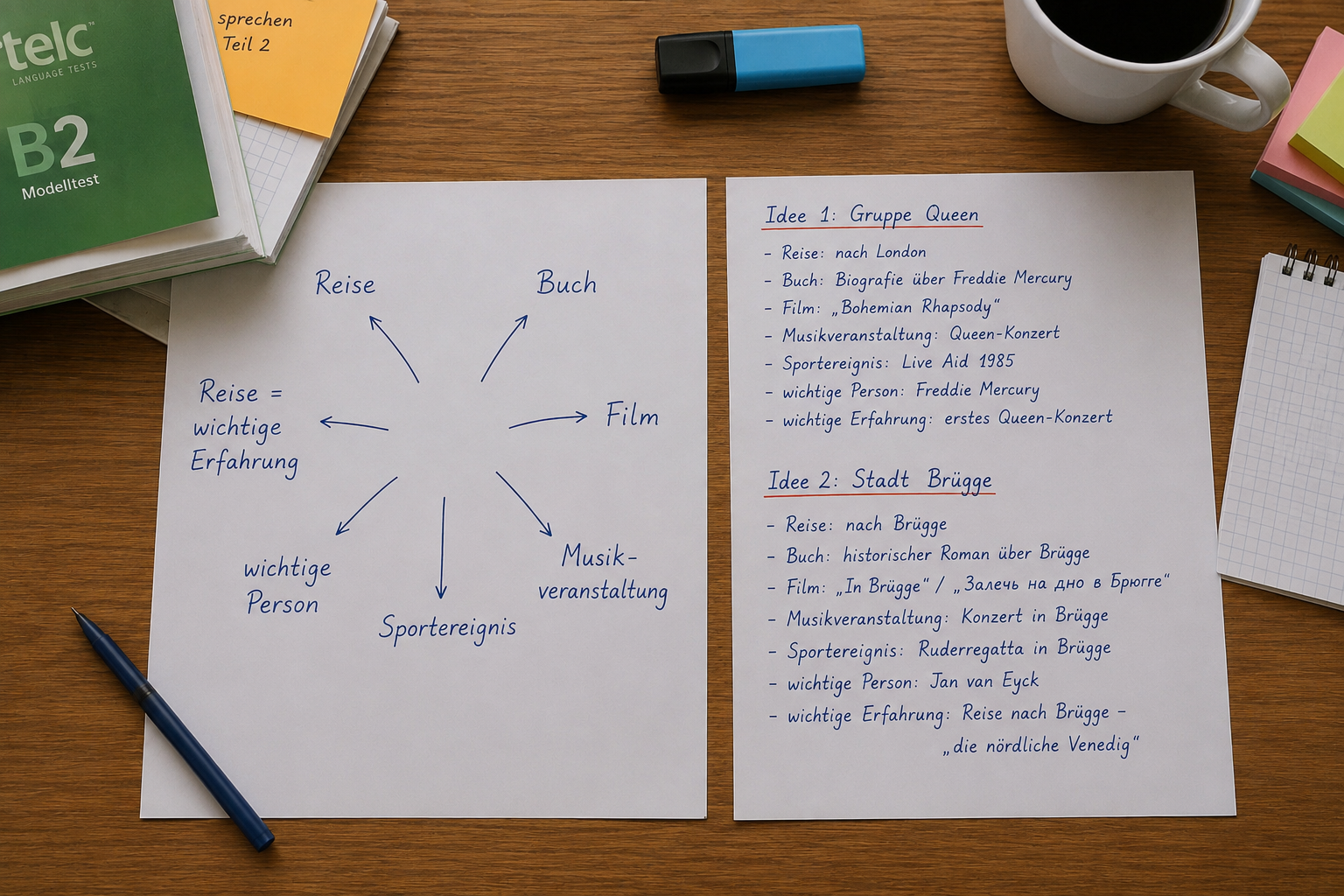 AI-generated image
The standard approach in telc Speaking B2 requires preparing 7 different topics, but we offer only one. An alternative strategy for preparing for the oral part of the exam.
15568
2
0
 AI-generated image
German in the DACH region: differences between Germany, Austria and Switzerland — vocabulary, grammar, pronunciation, plus tips for Goethe, telc and ÖSD.
5933
0
0
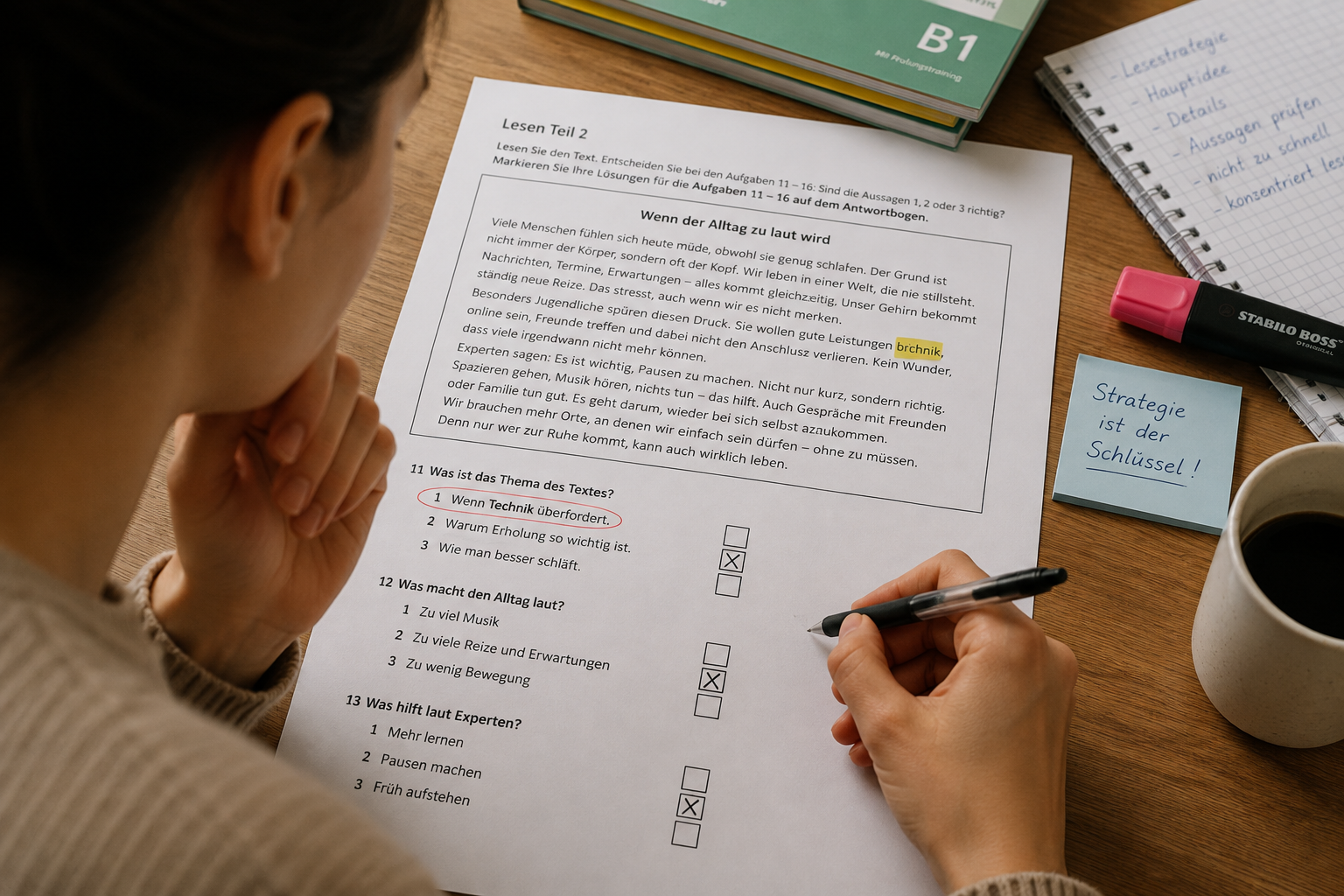 AI-generated image
Typical Mistakes in the Reading Section of B1/B2 Exams and How to Avoid Them: Reading Strategies, Paraphrasing, Working with Details.
10605
0
0
 AI-generated image
Why is a professional CV and a convincing motivation letter crucial for career starters?
7119
0
0
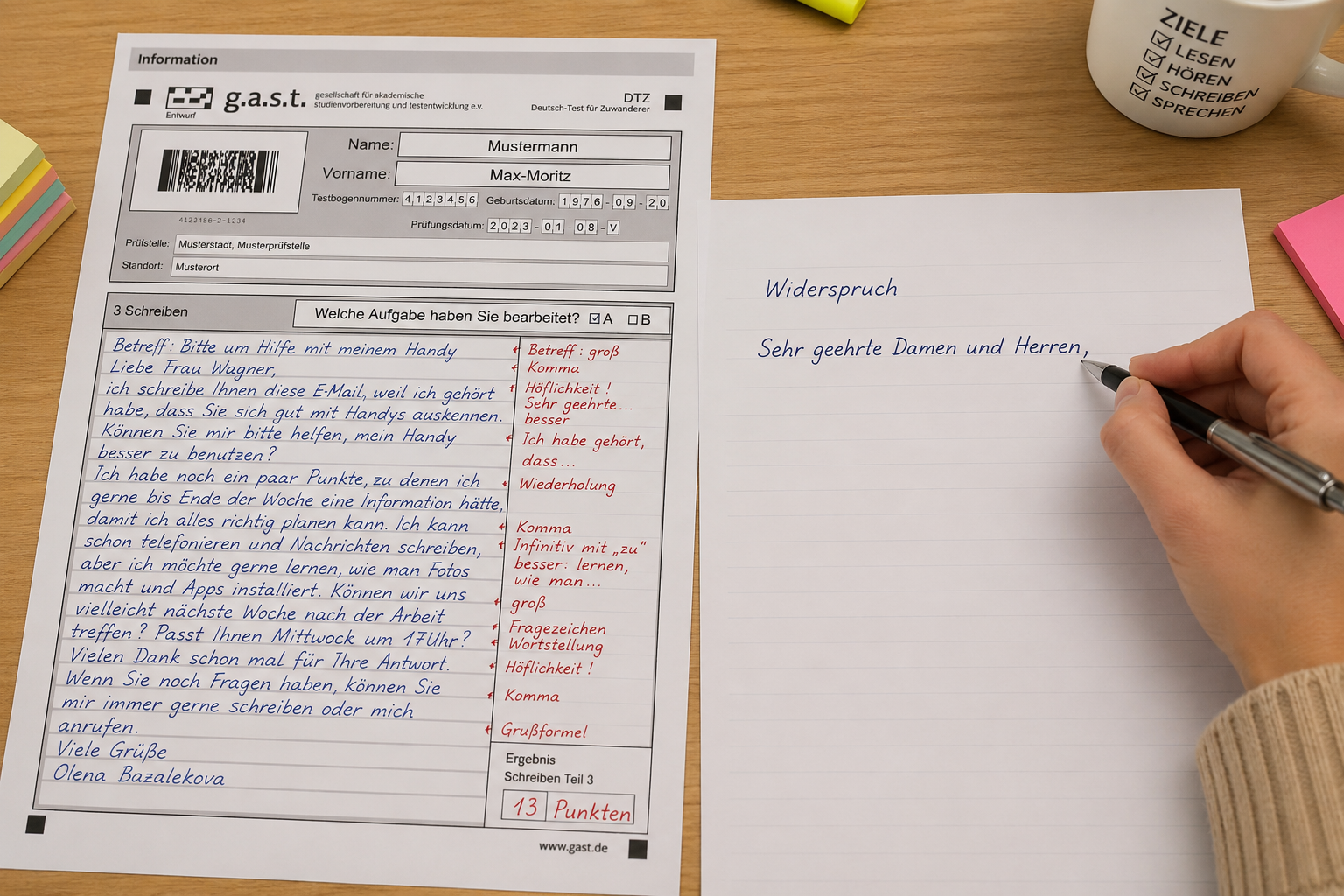 AI-generated image
Complete information and an example of how to write an official appeal if you failed the Schreiben part in the DTZ exam.
17709
0
0
 AI-generated image
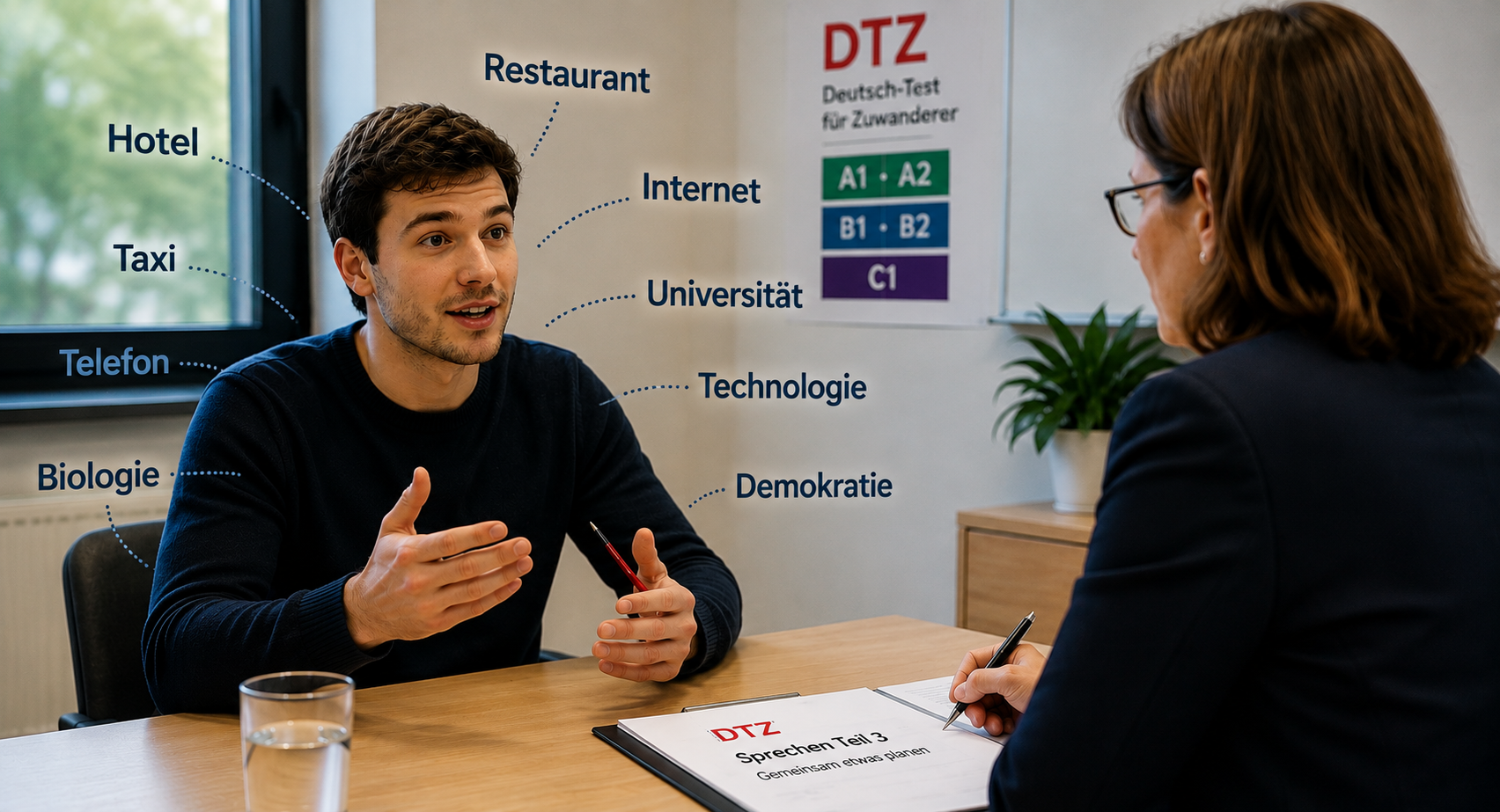
We’ll let you in on a little secret: how to prepare for and successfully pass the speaking part of the A1, A2, B1, and B2 exams using international words.
10591
0
0
 AI-generated image
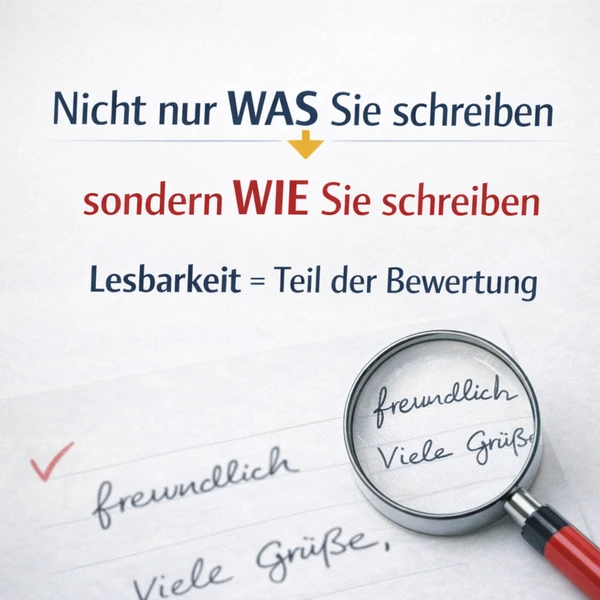
Why correct German letters are important in the writing section of the exam and how incorrect letters can lead to point deductions in telc, DTZ and ÖSD.
3597
1
0
 AI-generated image
How to stop having «a mess in your head» when preparing for DTZ, telc, and Goethe exams, and why learning German and successfully passing an exam are two completely different things.
6923
0
0
AI-generated image
Learn why structure is more important than grammar in DTZ B1 Schreiben, and how a clear strategy helps you confidently complete all task points.
3402
1
0
AI-generated image
Analysis of the tasks in telc B1 Lesen Teil 2: typical traps, common student mistakes, and a strategy that helps find the correct answers and avoid guessing.
2912
0
0