





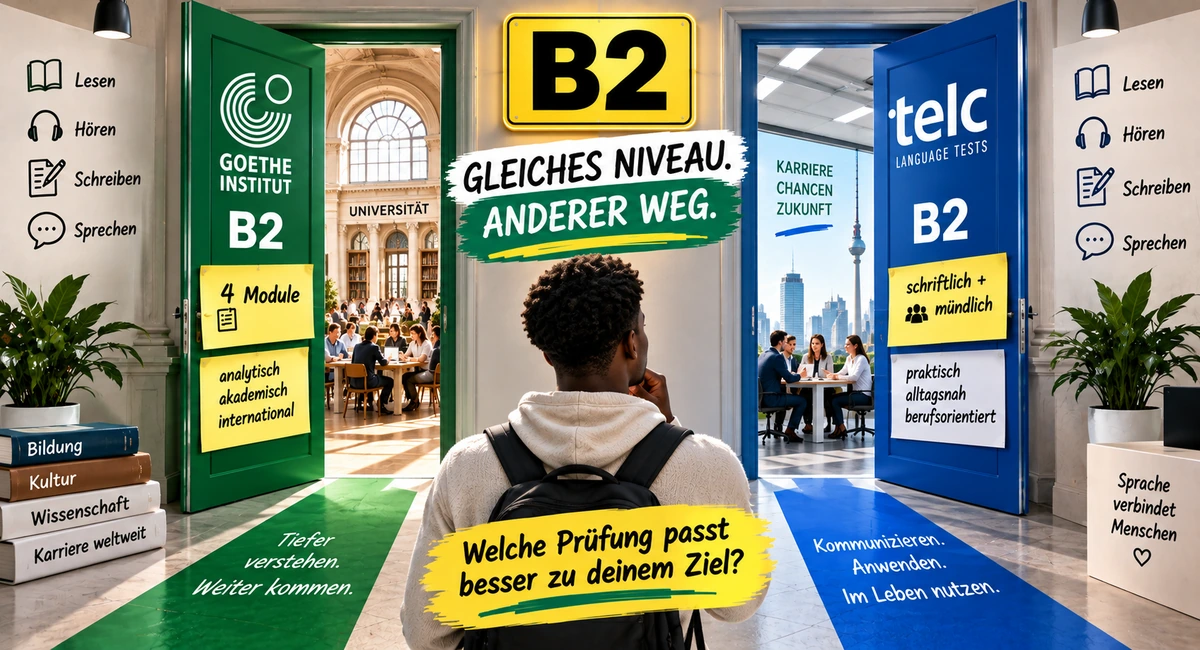
Goethe B2 or Telc B2:
Differences, Level, Recognition
Goethe B2 or telc B2? Find out the key differences in level, structure, recognition and which exam suits you better.
Overview: What is the Goethe-Zertifikat B2 and what is Telc Deutsch B2?
Anyone planning to study, work or legalise their status in Germany or other German-speaking countries should understand the difference between the Telc B2 and Goethe B2 exams. Both exams confirm the B2 level in accordance with CEFR. However, their practical application, structure and requirements differ considerably.
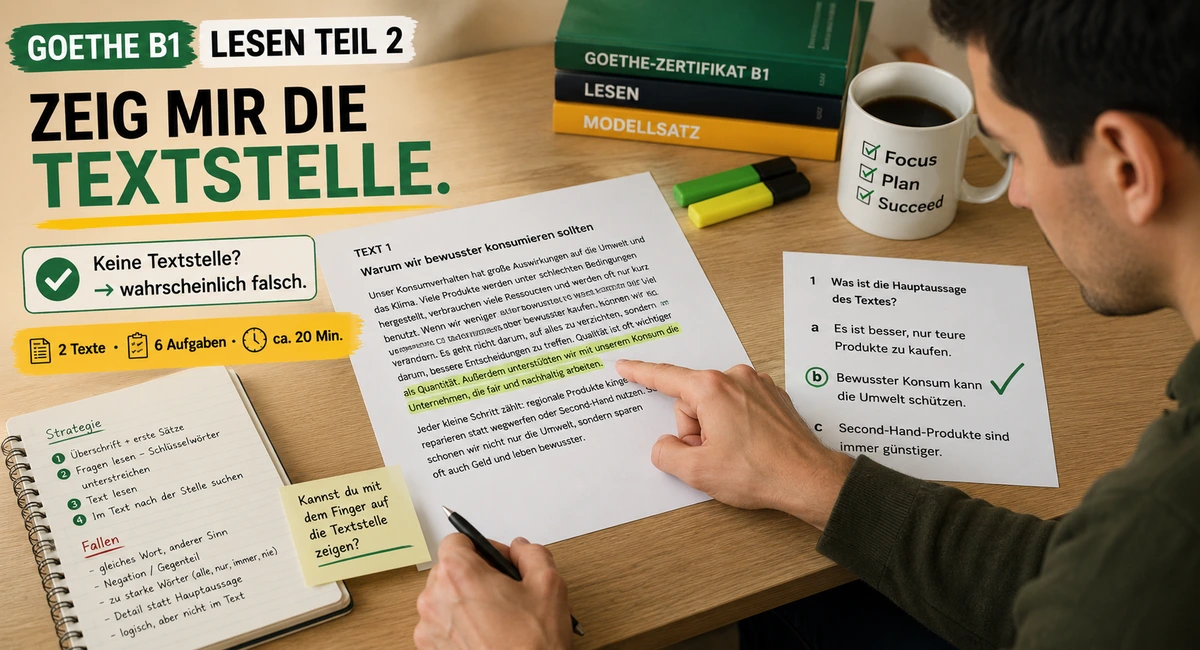
The Goethe-Zertifikat B2 is issued by the Goethe-Institut. The exam assesses the ability to express oneself and argue formally and logically, and comprises written and oral tasks with which language competence can be comprehensively tested. The Goethe-Zertifikat B2 is an internationally recognised certificate and may be suitable, among other things, for applications to some universities and higher education institutions in Germany. However, the requirements for proof of language proficiency always depend on the respective university and the specific degree programme, and should therefore always be checked individually.
The Telc B2 certificate was developed by the organisation Telc gGmbH. Its concept is based on testing functional language competence — the ability to use German at work, in everyday life and in social interactions.
The difference between Telc and Goethe B2 is not limited to the task format alone. It also concerns the assessment logic, the requirements for linguistic accuracy and the areas of application of the certificate.
Structure of the Goethe B2 exam
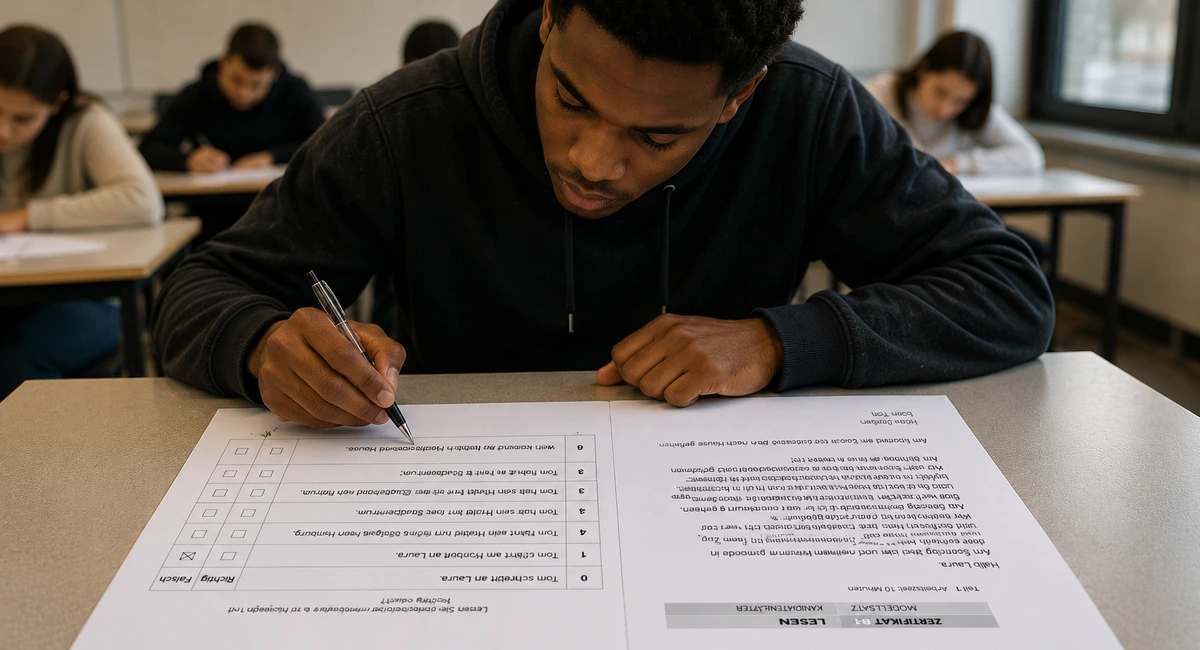
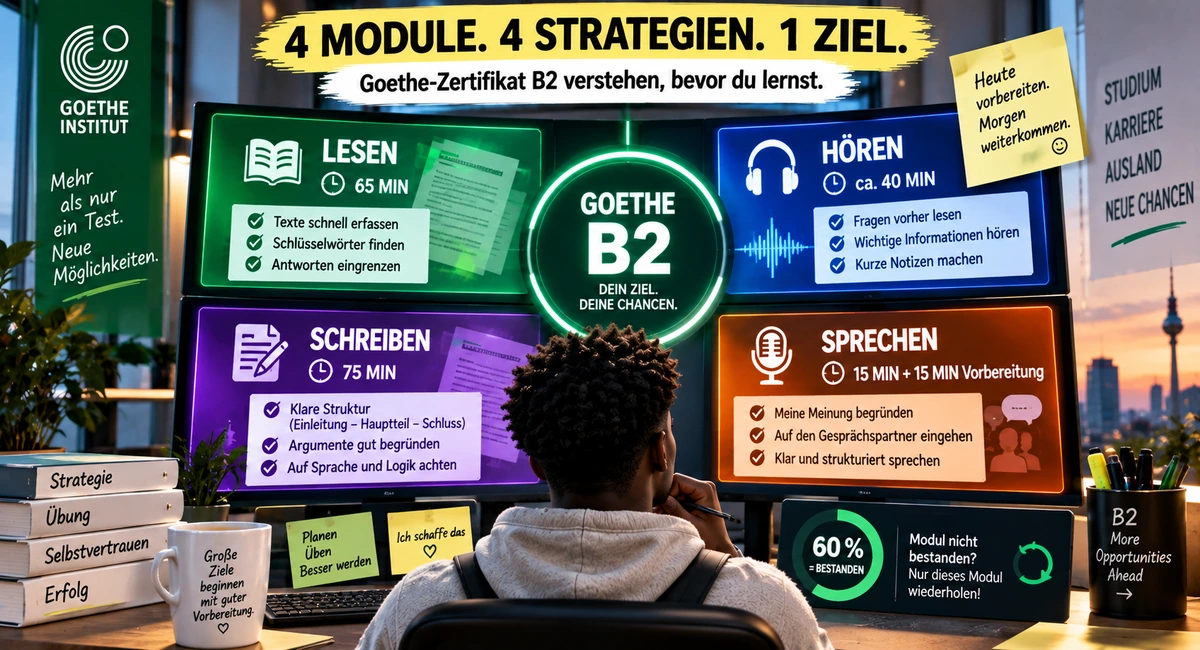
The structure of Goethe B2 is based on a modular principle, but with fairly strict rules for participation. The exam comprises four separate modules, each of which is assessed independently:
- Reading;
- Listening;
- Writing;
- Speaking.
Each module must be passed with at least 60%. If the candidate fails at least one part, they do not receive a certificate — even if the overall score is high.
The structure of Goethe B2 does not allow for the compensation of weak results. The exam tests a balanced language level in all four skills.
👉 Exercises for preparation for the Goethe B2 examStructure of the Telc B2 exam
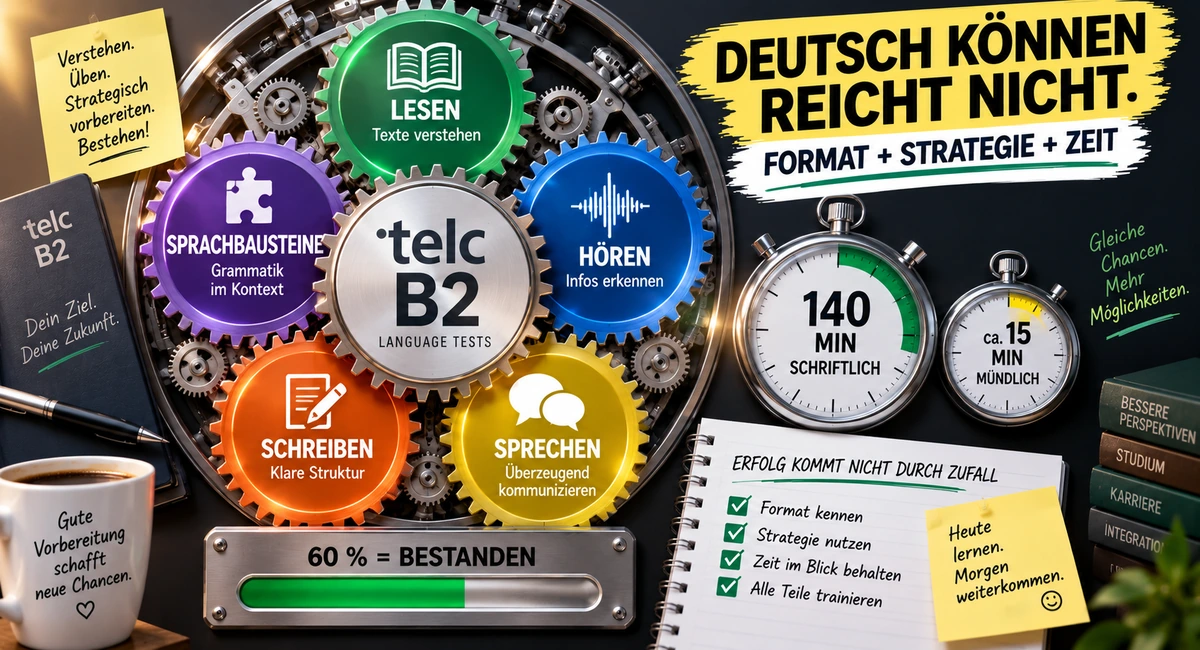
The structure of Telc B2 also covers four skills, but the assessment logic is different. The written part combines several components into one block, while the oral part is assessed separately.
The B2 Telc exam has the following structure:
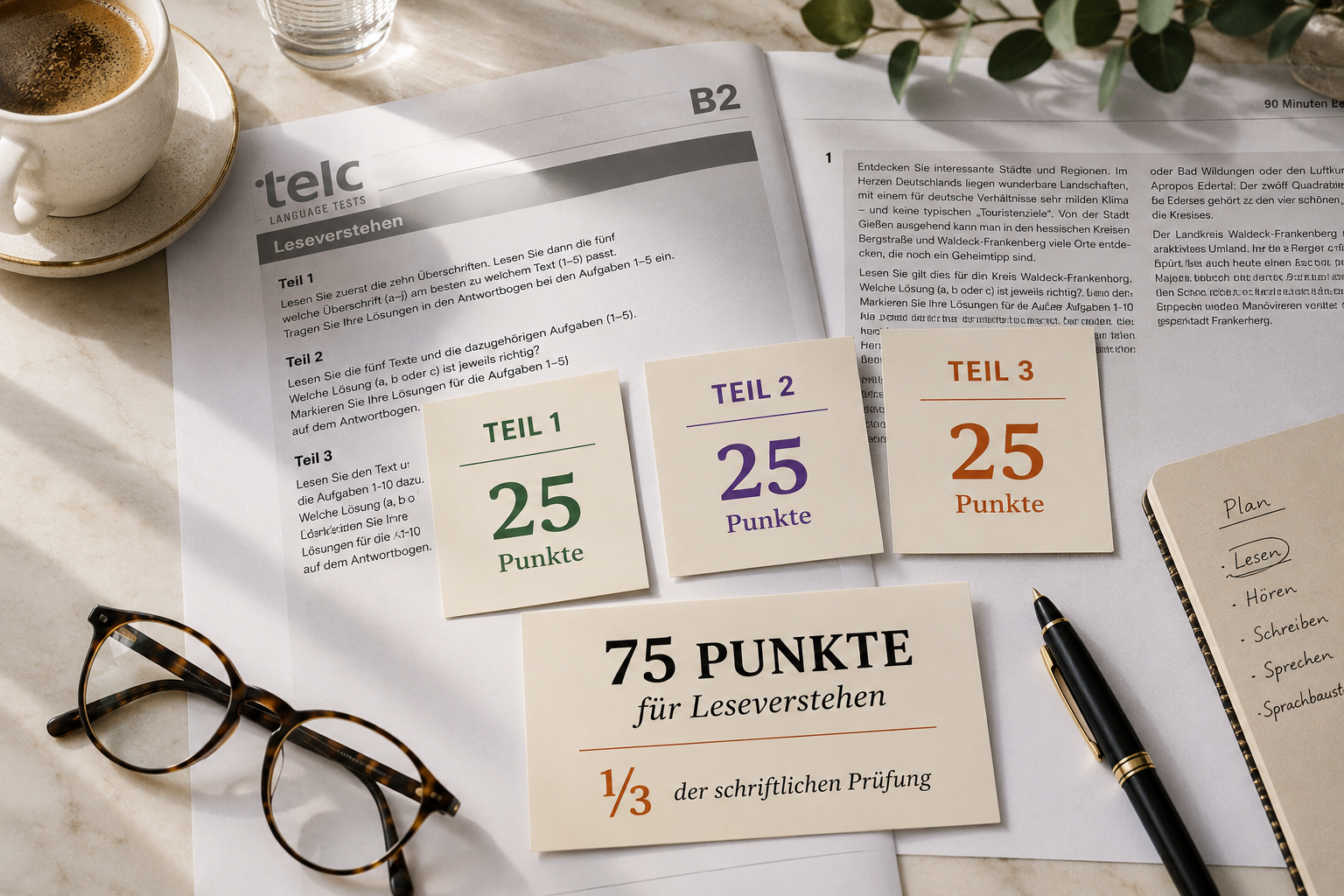
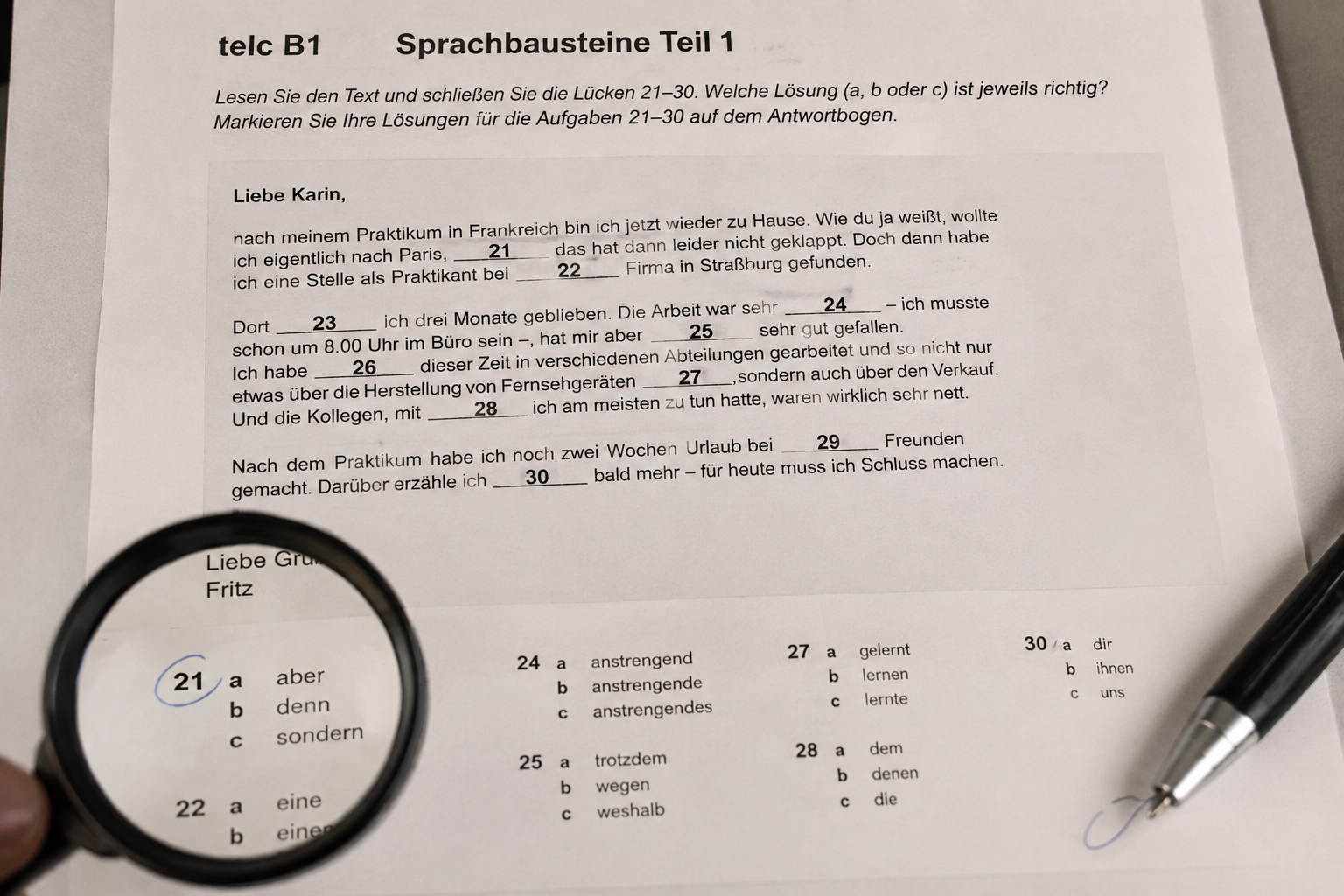
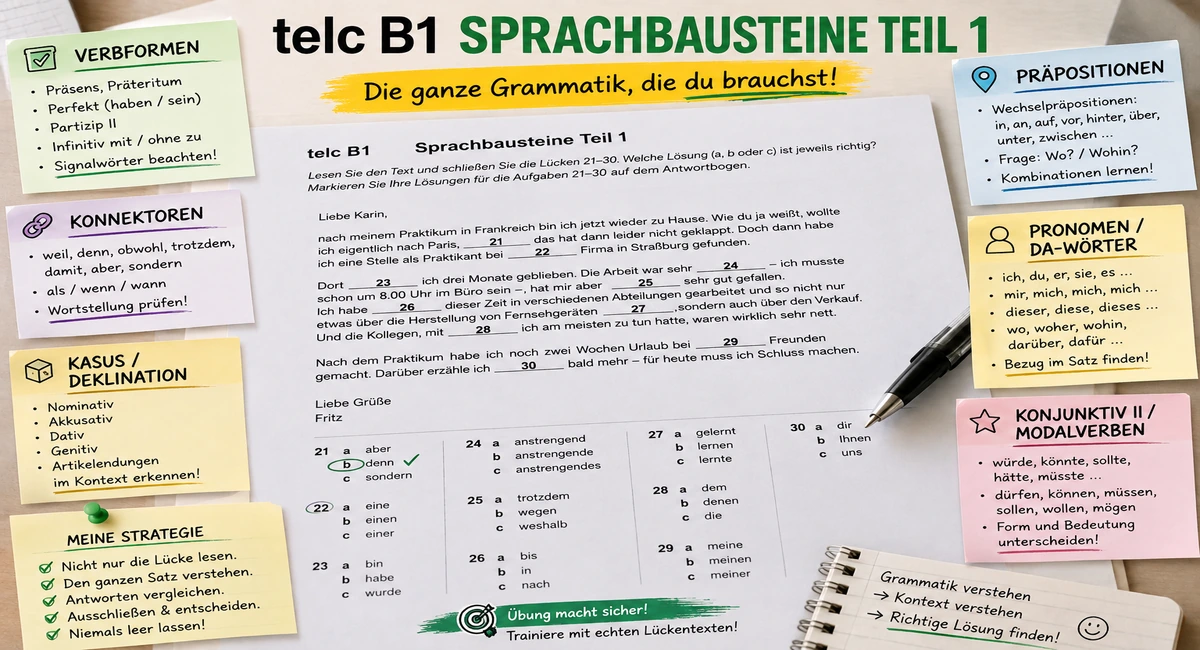
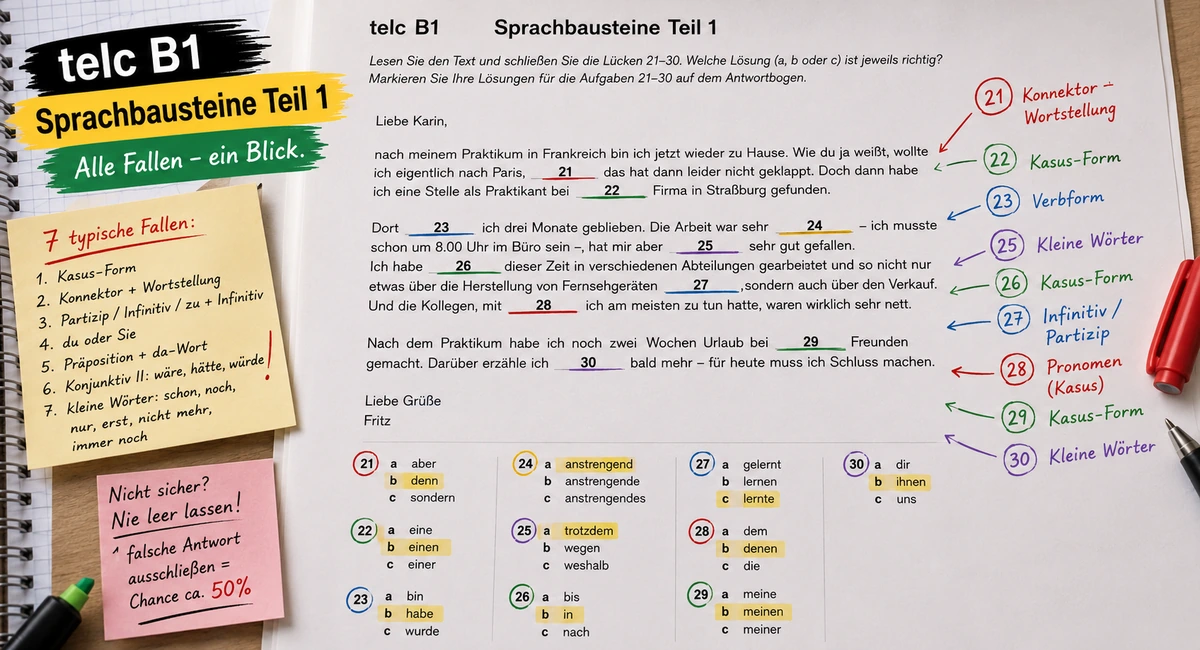
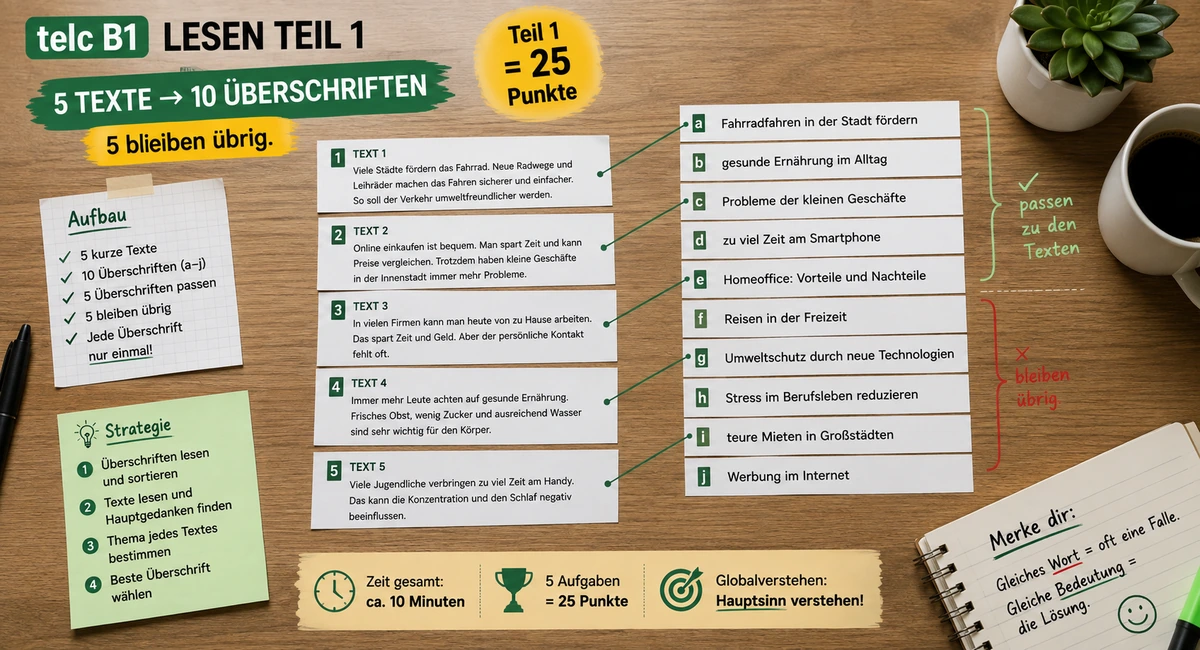
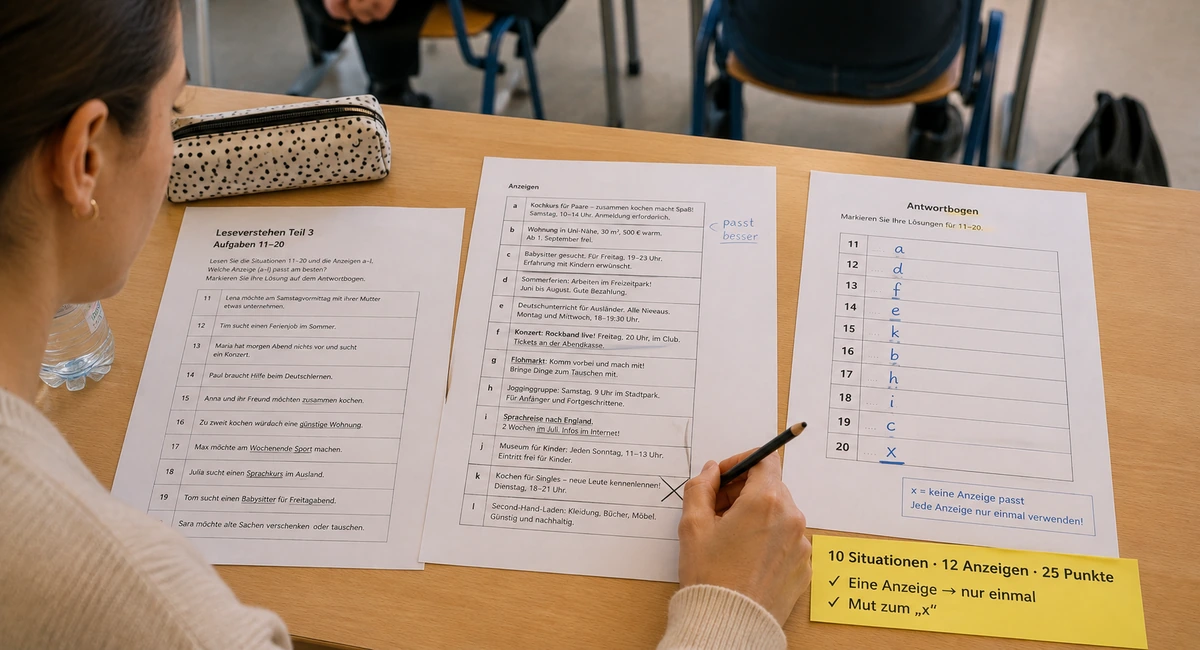
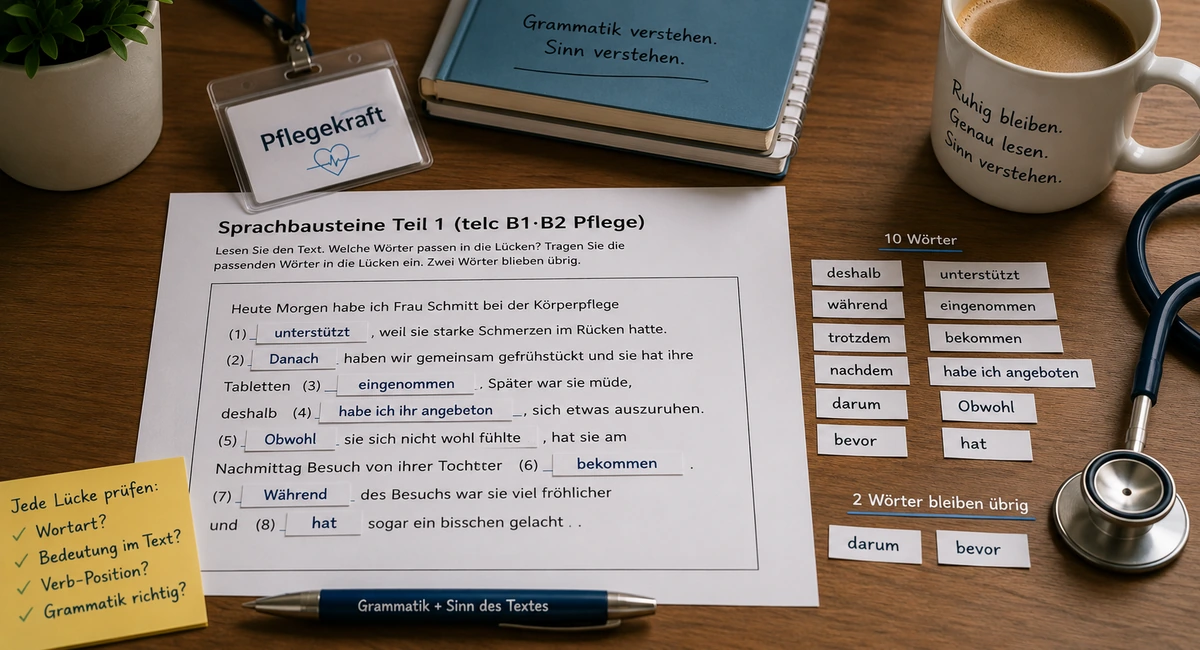
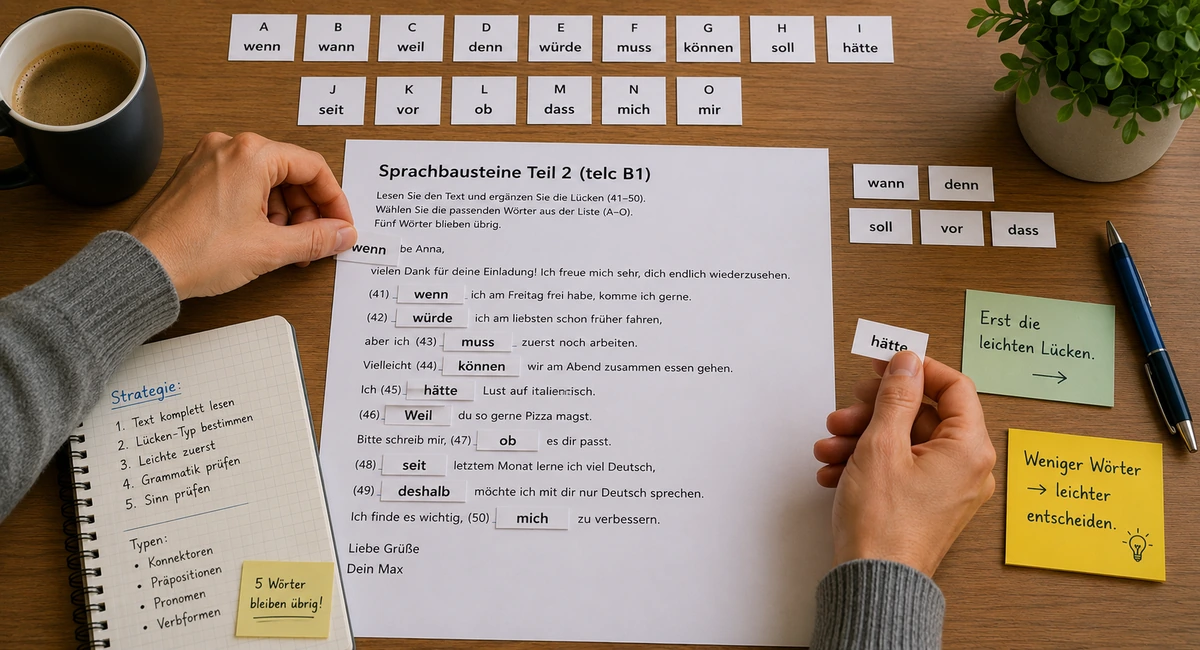
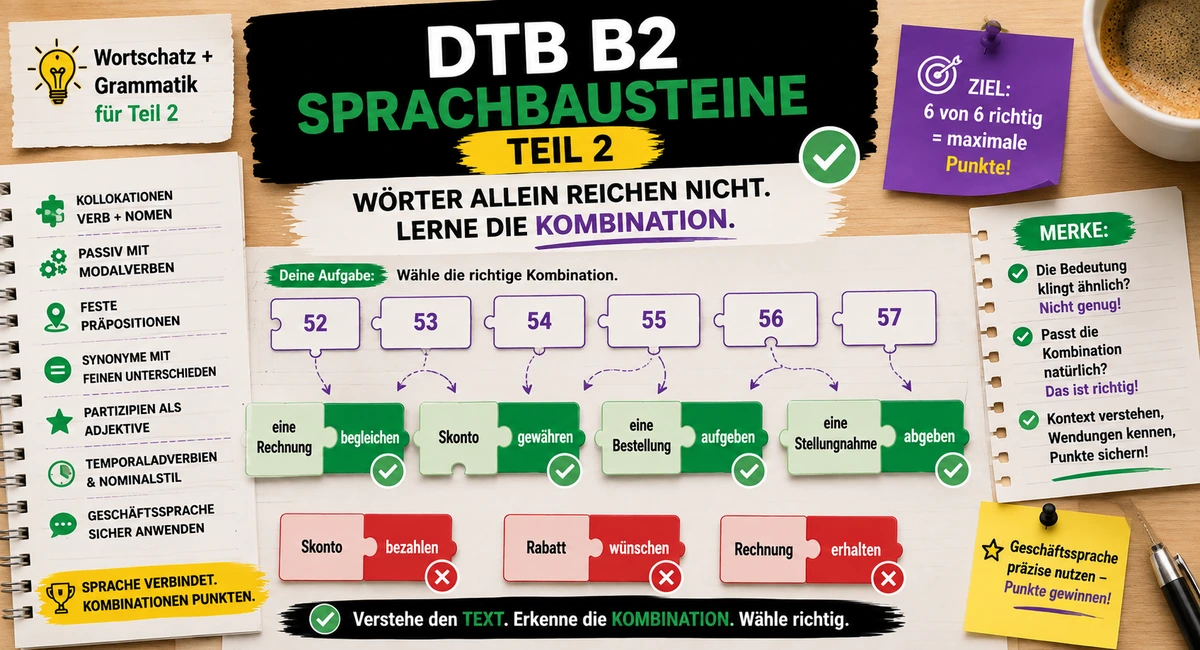
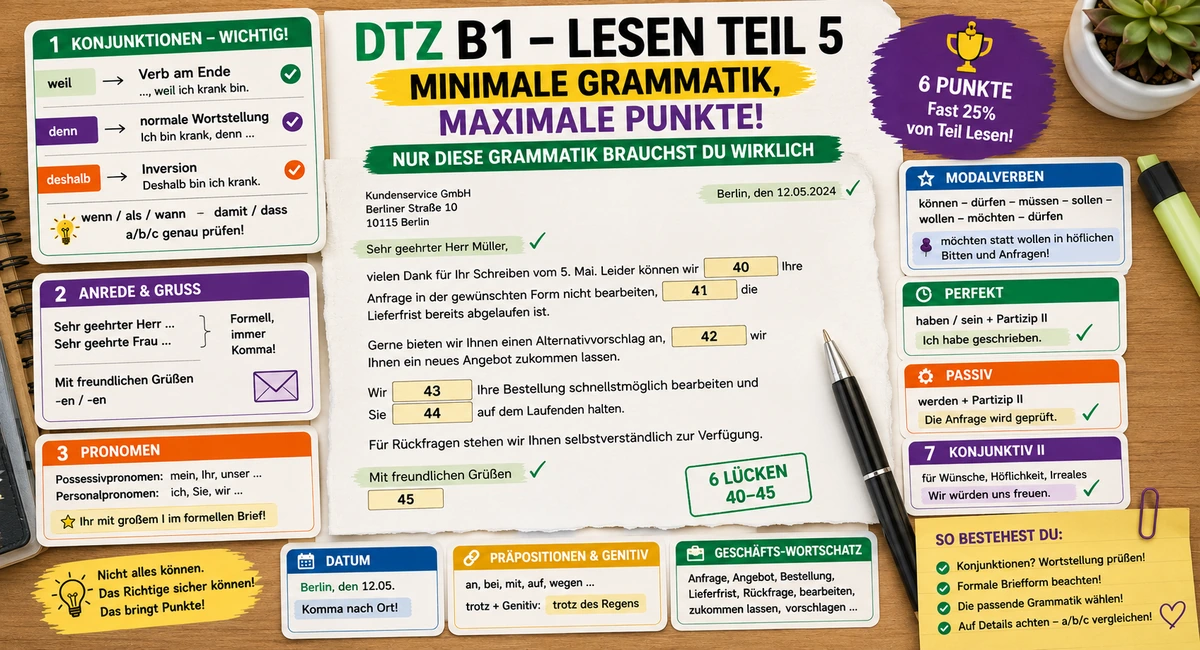
- Reading and language elements (Lesen + Sprachbausteine) — testing text comprehension, vocabulary and grammar;
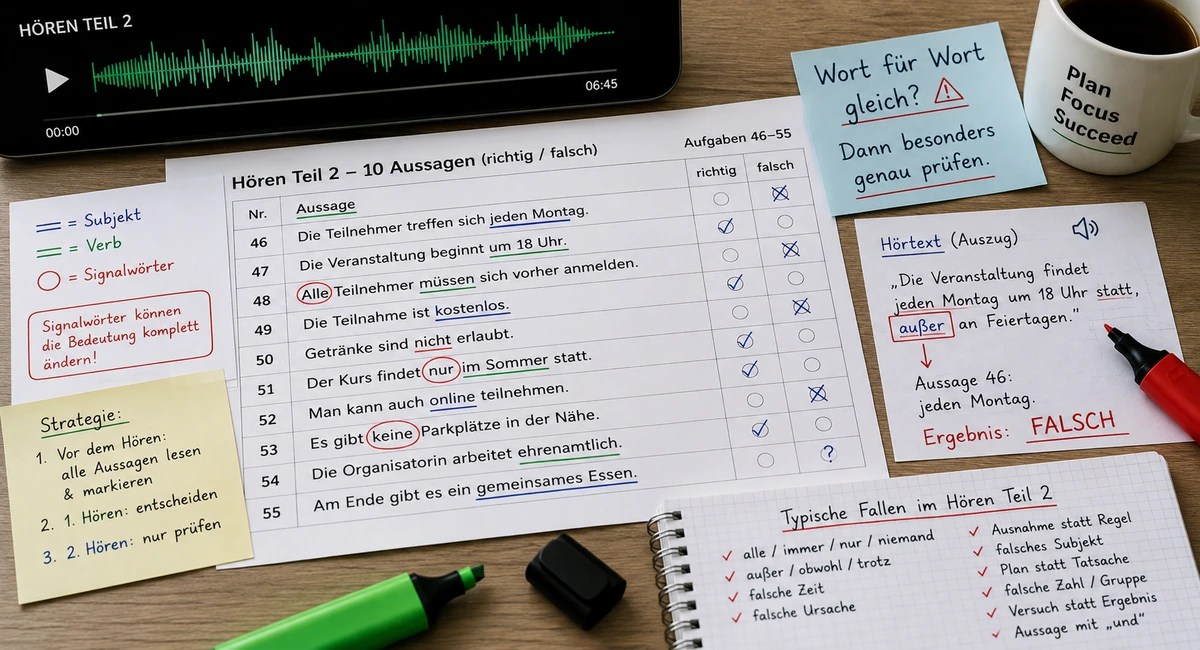
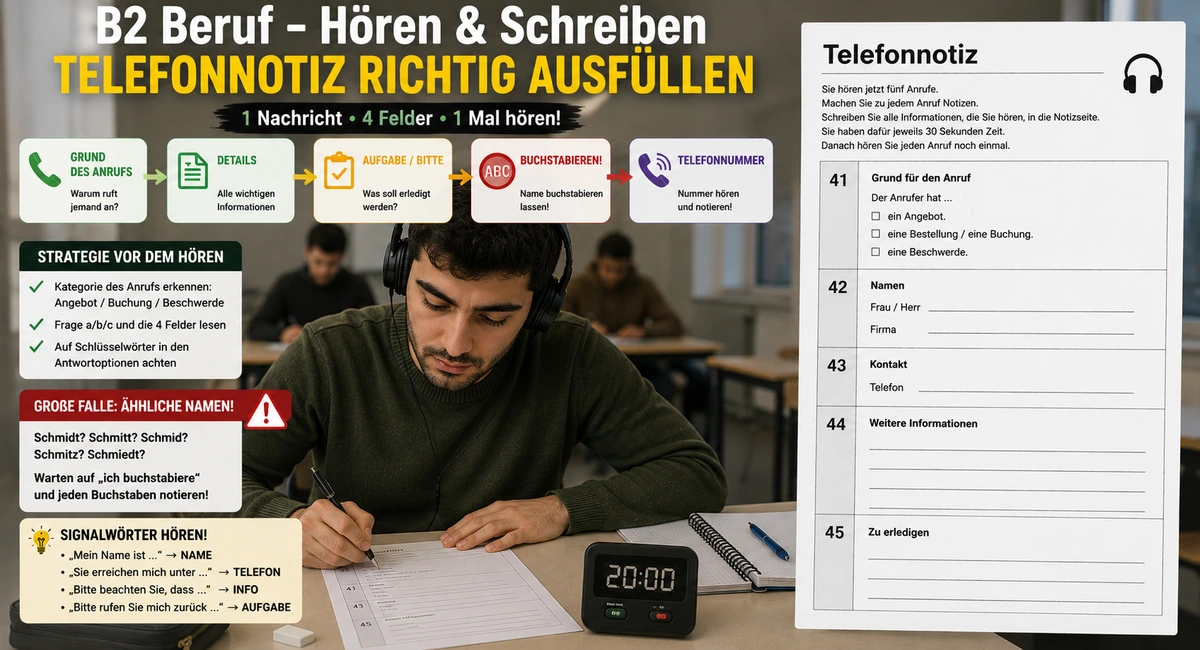
- Listening (Hörverstehen) — testing language comprehension in real situations;
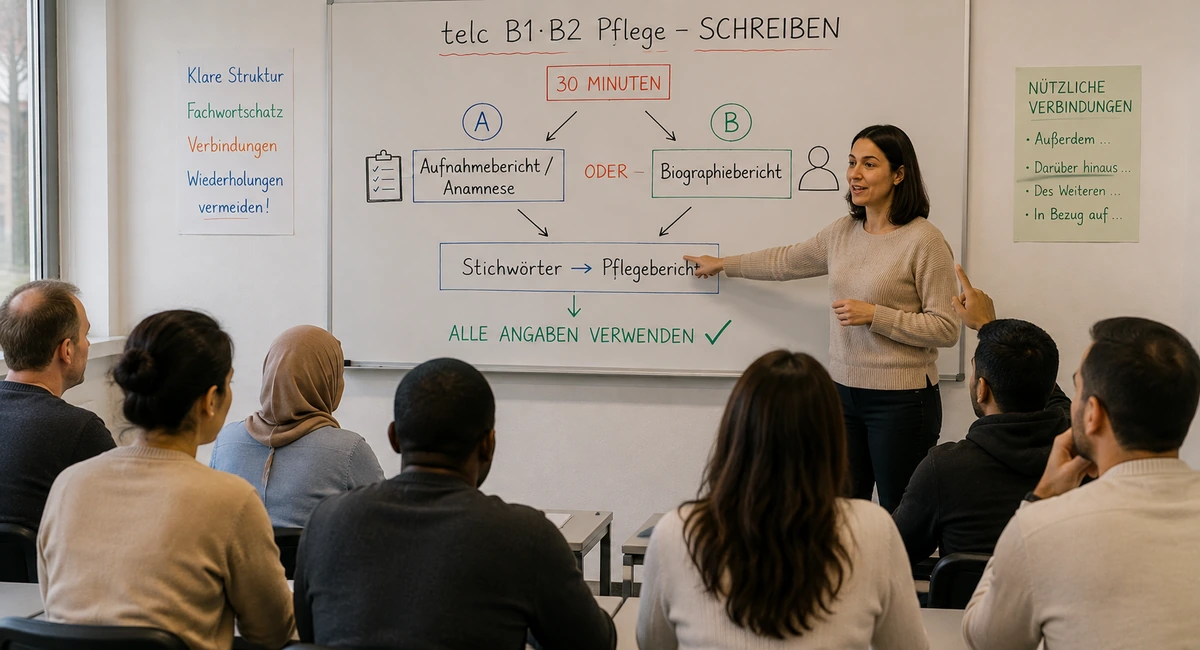
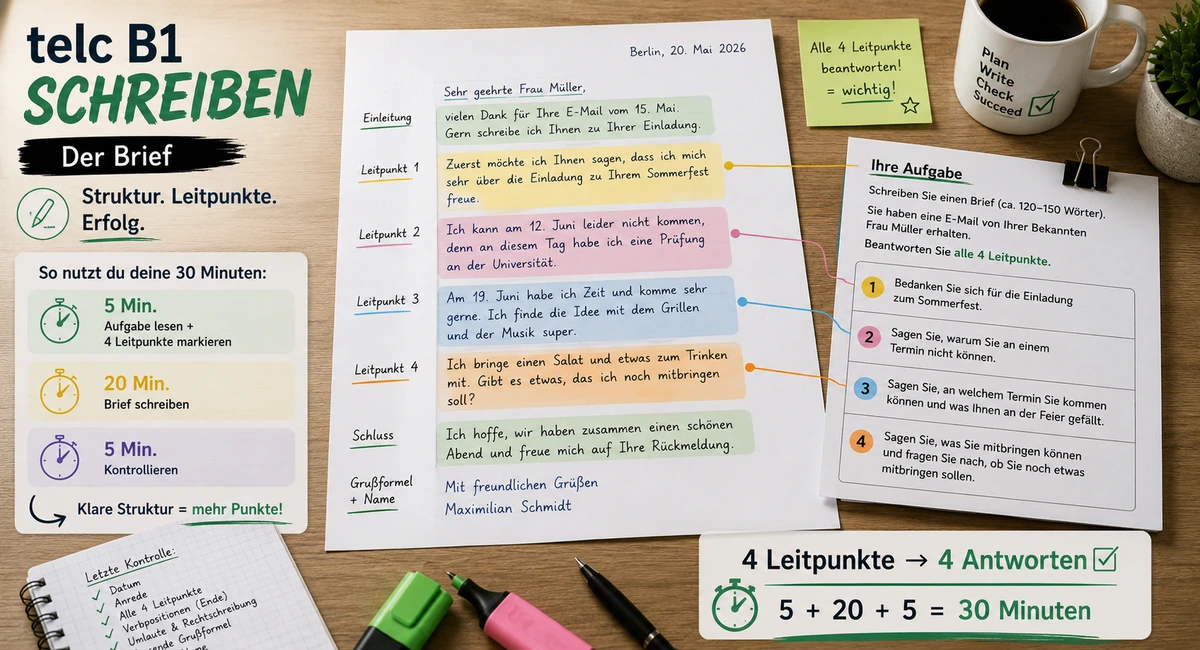
- Writing (Schreiben) — a written task within the written part of the exam;
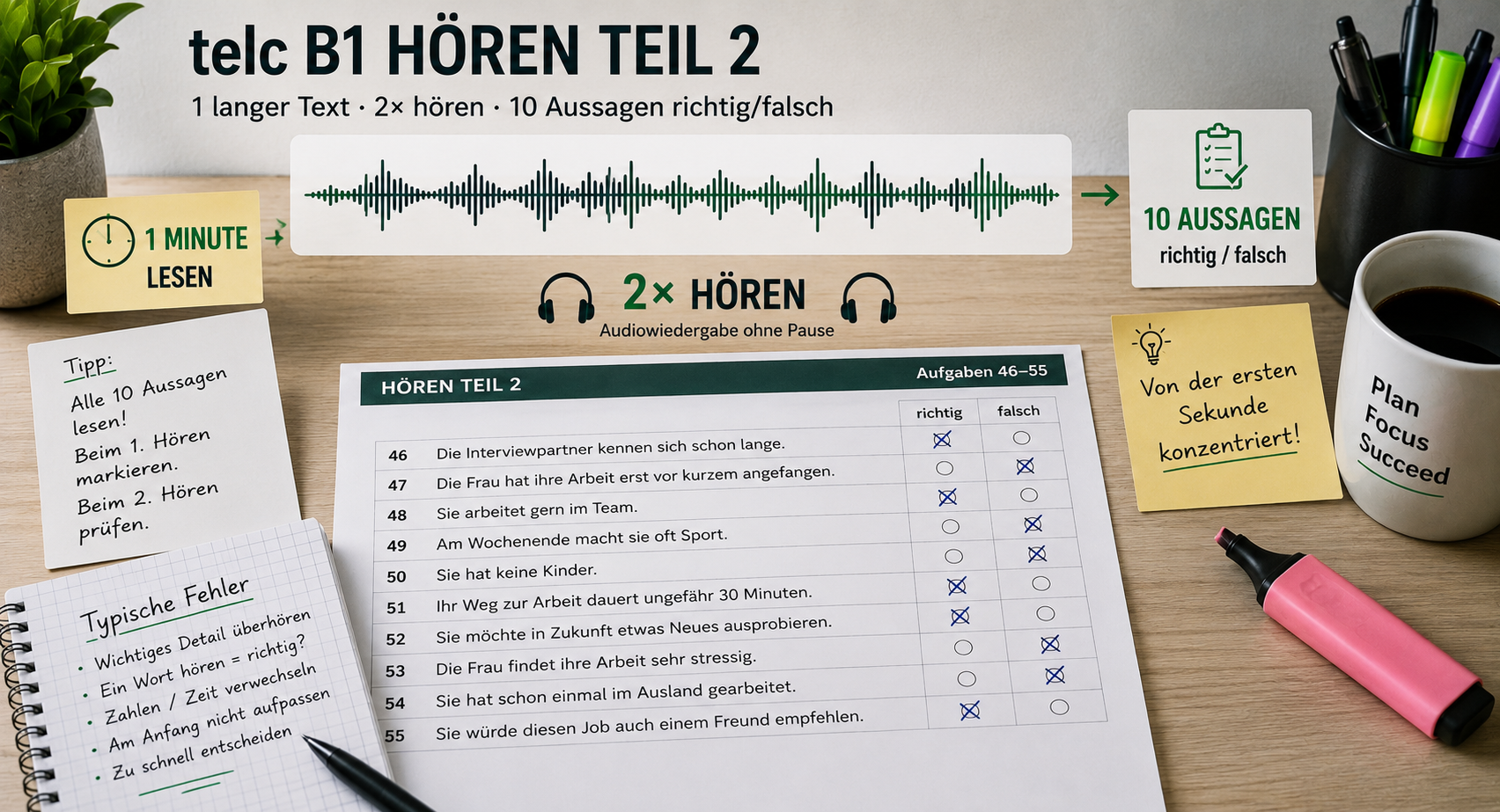
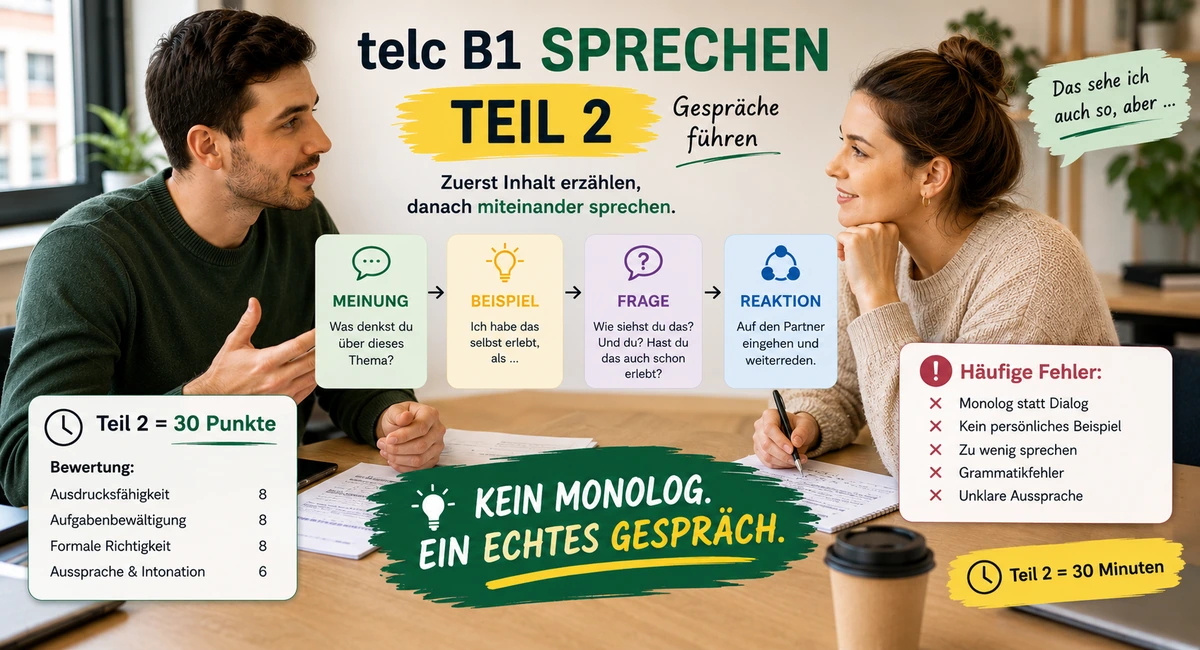
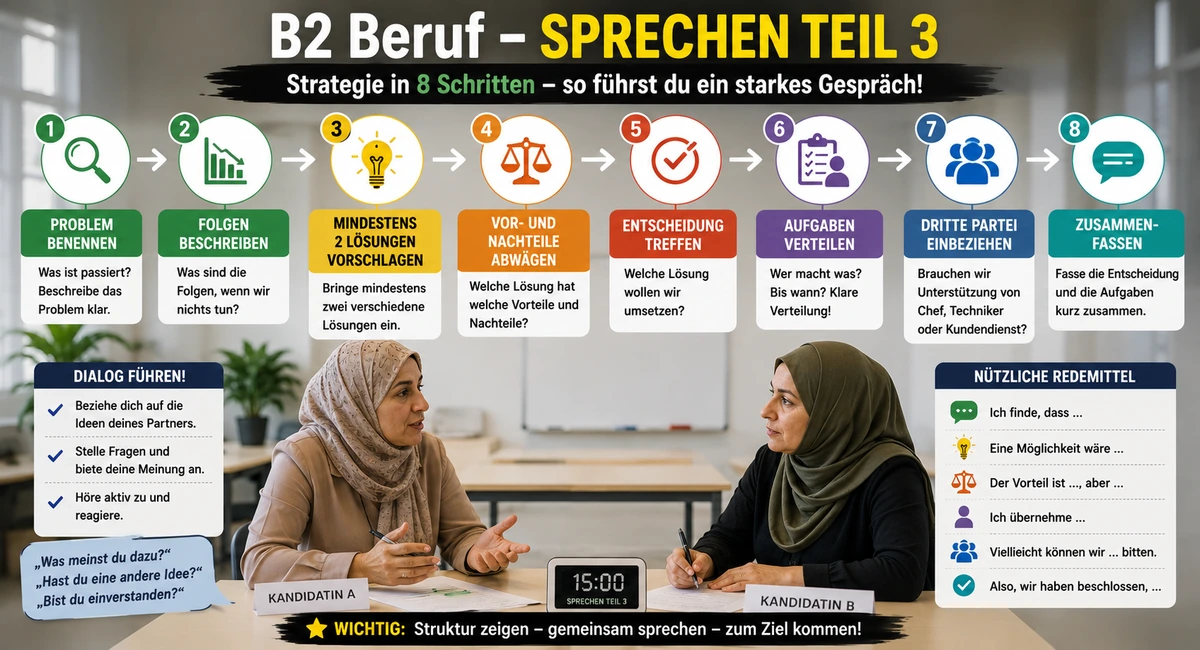
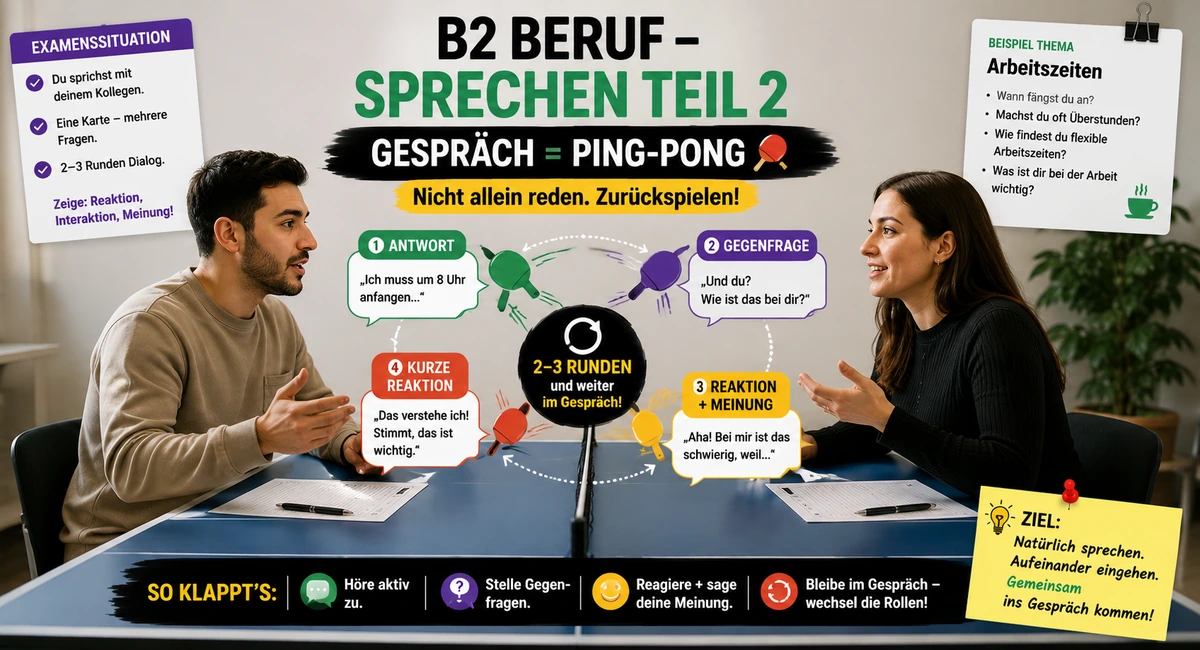
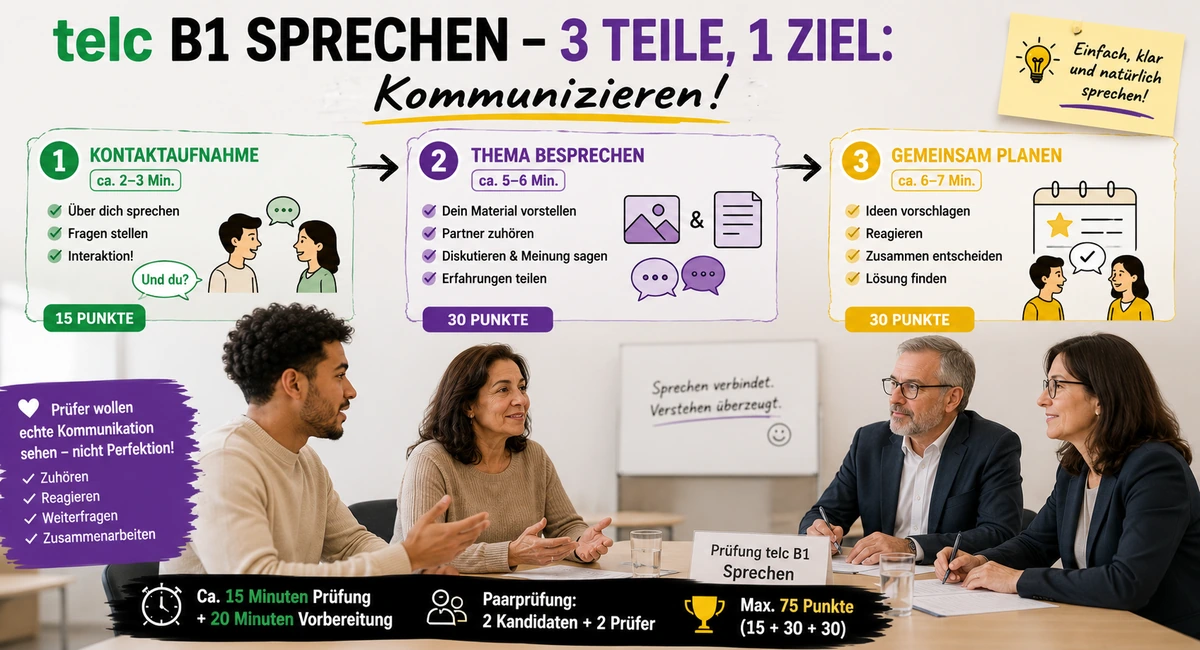
- Speaking (Sprechen) — conducting dialogues, monologues, describing situations or pictures, etc.
The key difference is that telc Deutsch B2 does not consist of four completely independent modules, but of a written and an oral part of the exam. The Goethe-Zertifikat B2, on the other hand, is divided into four separate modules that can be taken individually or in combination.
👉 Exercises for preparation for the Telc B2 examWhat the two exams have in common
Despite significant differences, the exams share a number of common features that should be borne in mind:
- Correspondence with the B2 level in accordance with CEFR;
- Testing of the four language skills;
- international recognition;
- possibility of taking the exam at examination centres outside Germany;
- paper or digital format (depending on the centre).
Both certificates formally confirm the same level. The differences begin with practical application and the requirements of specific institutions.
| Criterion | Goethe B2 | Telc B2 |
|---|---|---|
| Organisation | Goethe-Institut | Telc gGmbH |
| Structure | 4 separate modules | Written + oral part |
| Assessment logic | 60% in each module individually | Written and oral part are assessed in two exam blocks |
| Focus | Academic | Practical |
| Minimum score | 60% for each module | At least 60% in the written part AND 60% in the oral part |
Detailed exam structure — comparison of modules
Comparing the modules is an important step in analysing Telc B2 vs. Goethe B2, as the actual difference between the exams becomes apparent precisely at the level of specific tasks and the format of competence testing. Formally, both tests assess reading, listening, writing and speaking, but the approach to testing each skill, the logic of the task design and the assessment criteria differ considerably.
Reading — comparison of task formats
The reading module of both exams formally tests the same thing — the comprehension of written texts at B2 level. In practice, however, the difference lies in the type of texts, the type of questions and the requirements for information analysis.
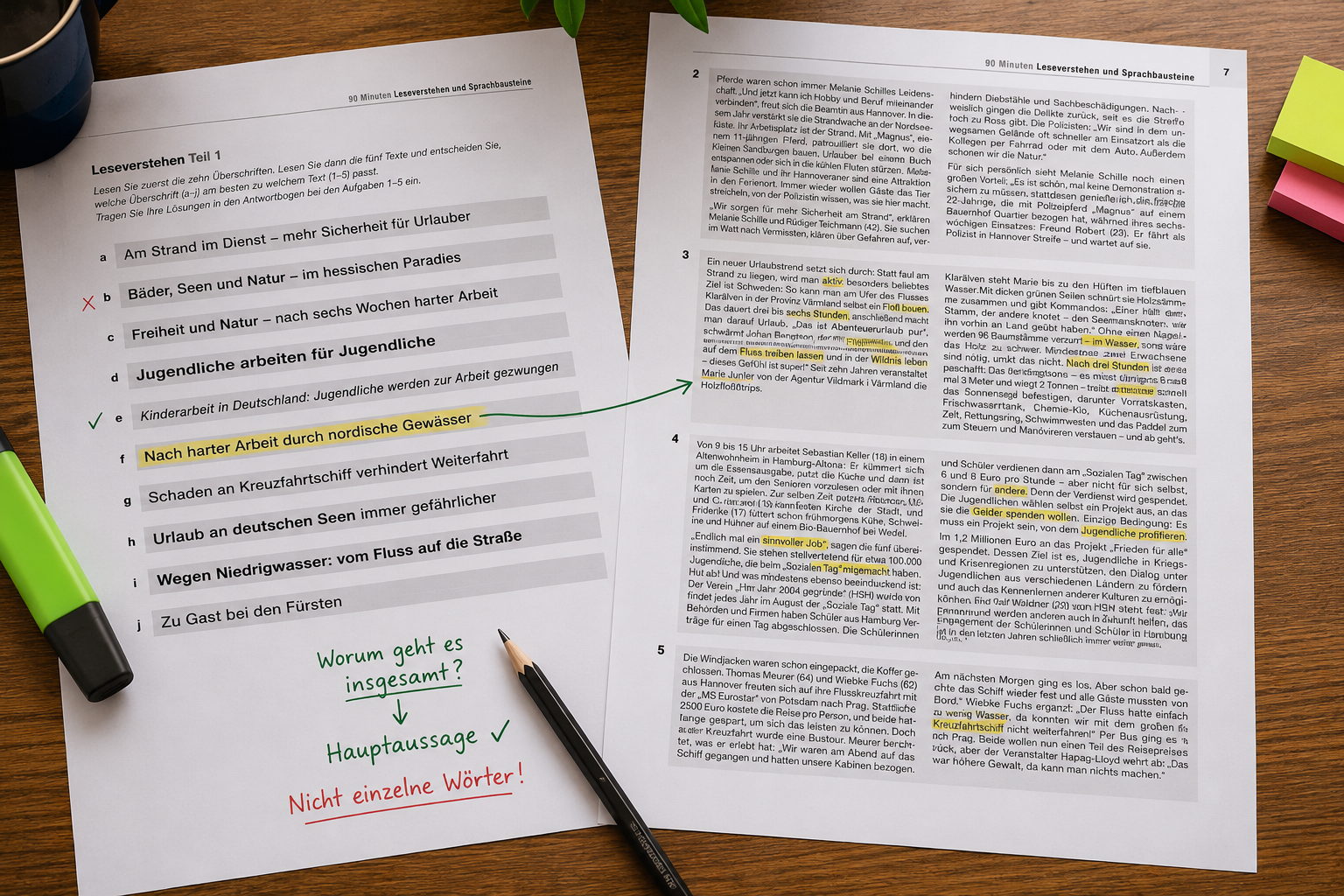
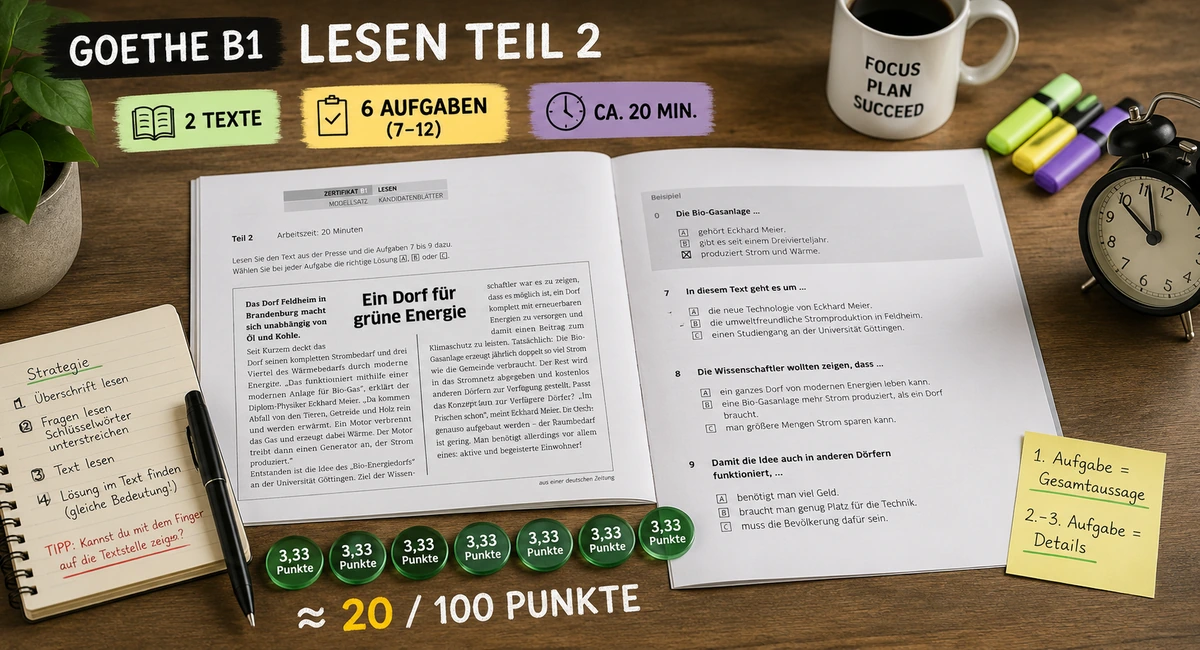
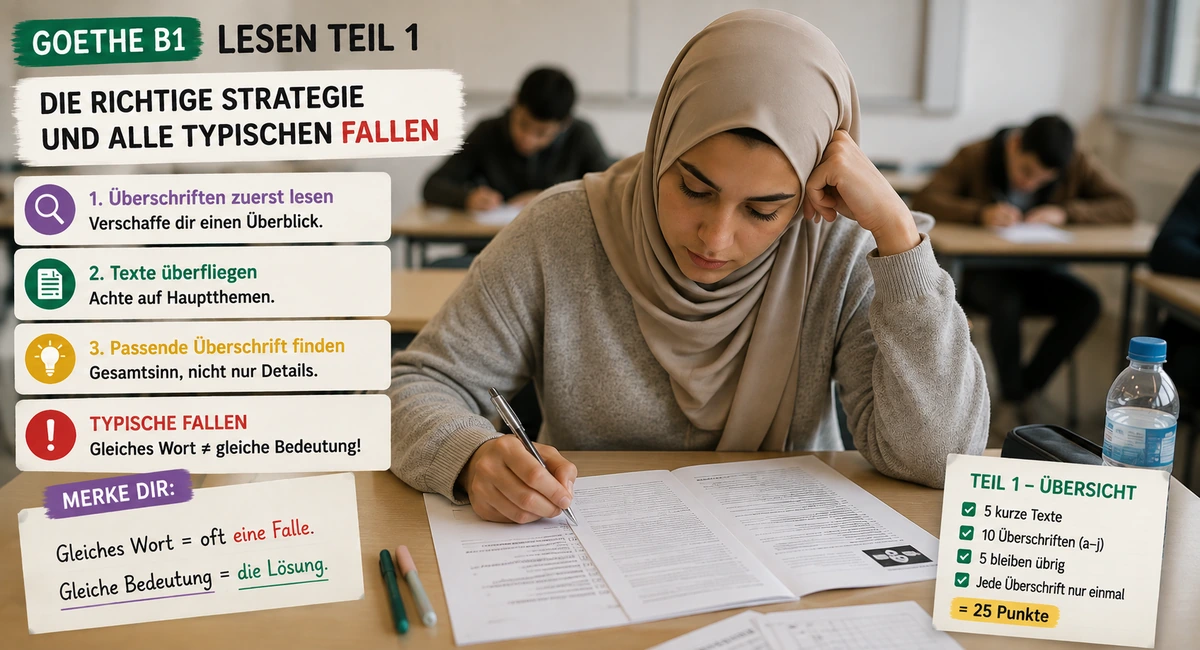
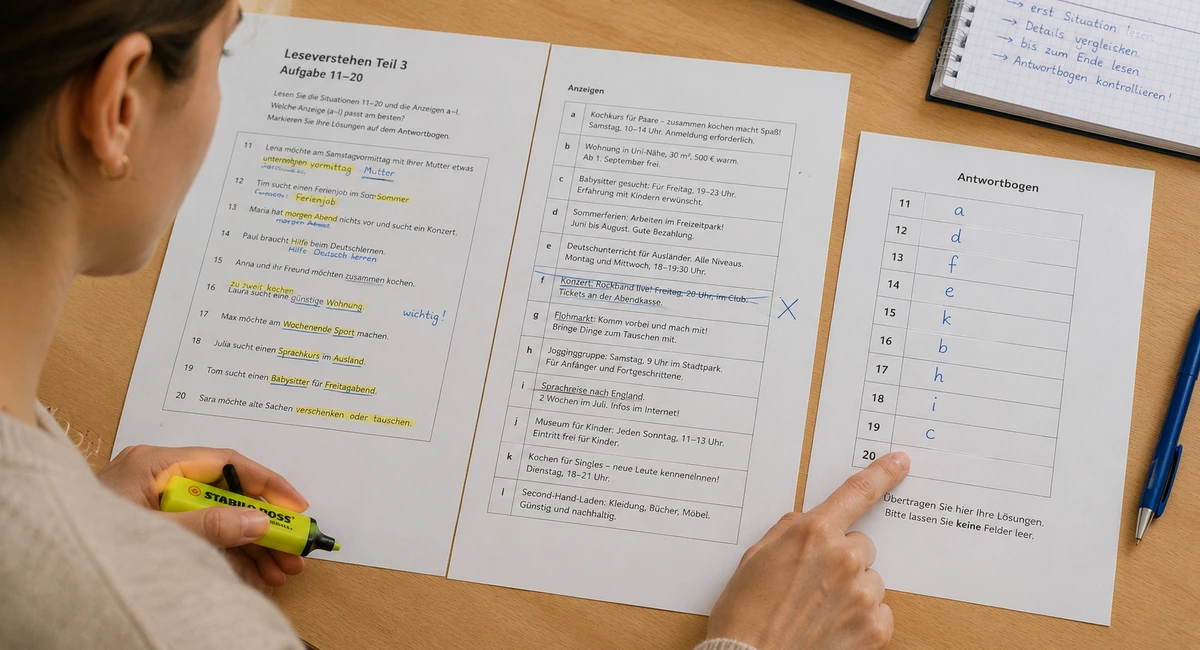
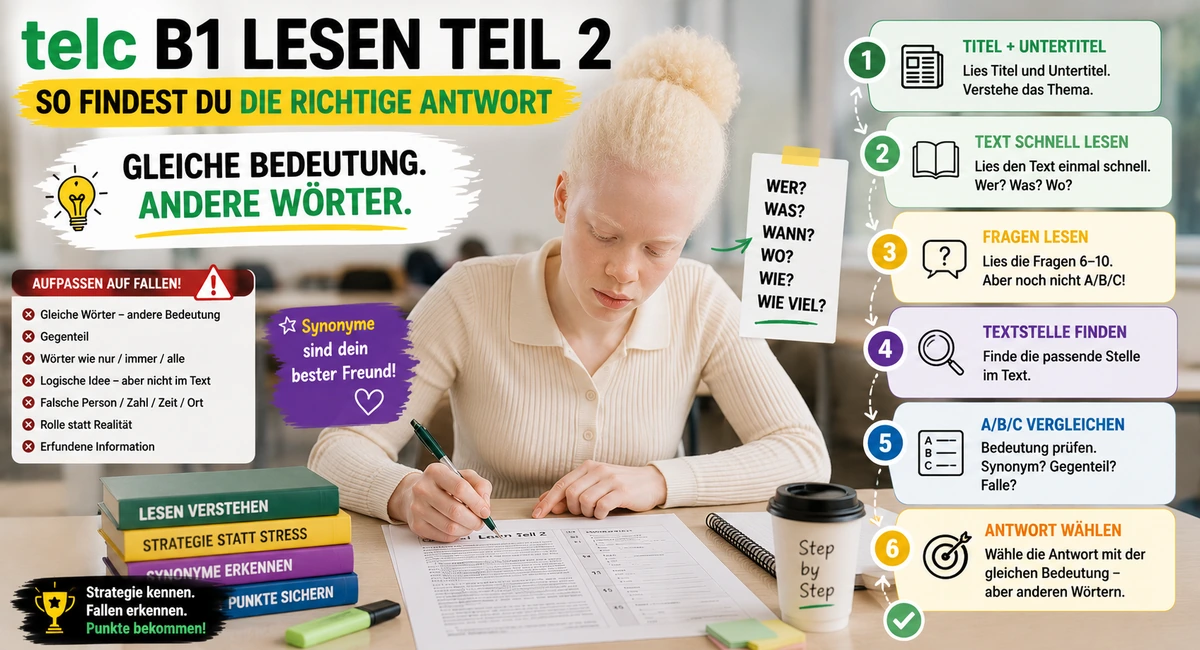
In the Goethe B2 exam, reading is based on more complex texts in terms of content. These may be journalistic articles, analytical overviews or texts with a clearly defined position on the part of the author. The tasks often test not only factual comprehension, but also the ability to recognise arguments, logical connections and indirect conclusions.
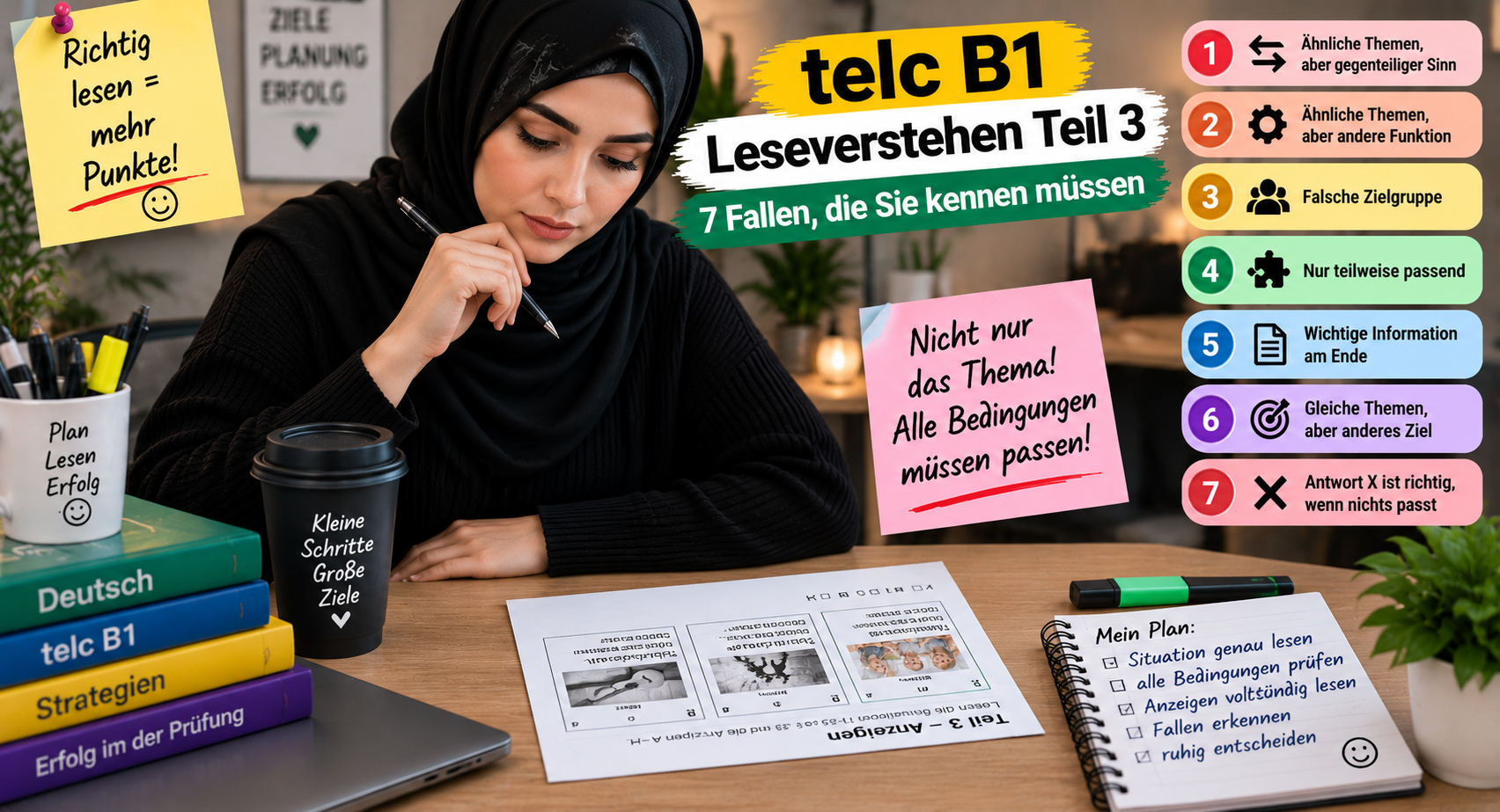
In the Telc exam, reading is more application-oriented. The basis consists of functional texts: letters, announcements, informational messages, instructions. The questions are generally aimed at finding specific information and correctly interpreting the content, without analysing the style in depth.
| Parameter | Goethe B2 | Telc B2 |
|---|---|---|
| Number of parts | 5 parts | 3 parts |
| Duration (minutes) | 65 | 90 (together with language sections) |
| Assessment | Assessed as a separate module | Phase of the written part |
| Typical level of difficulty | Higher, analytical | Medium, practical |
Listening — level of difficulty and structure
Listening comprehension is one of the modules where the difference between the exams is particularly noticeable. It manifests itself in the speaking speed, the types of recordings and the number of opportunities to listen again.
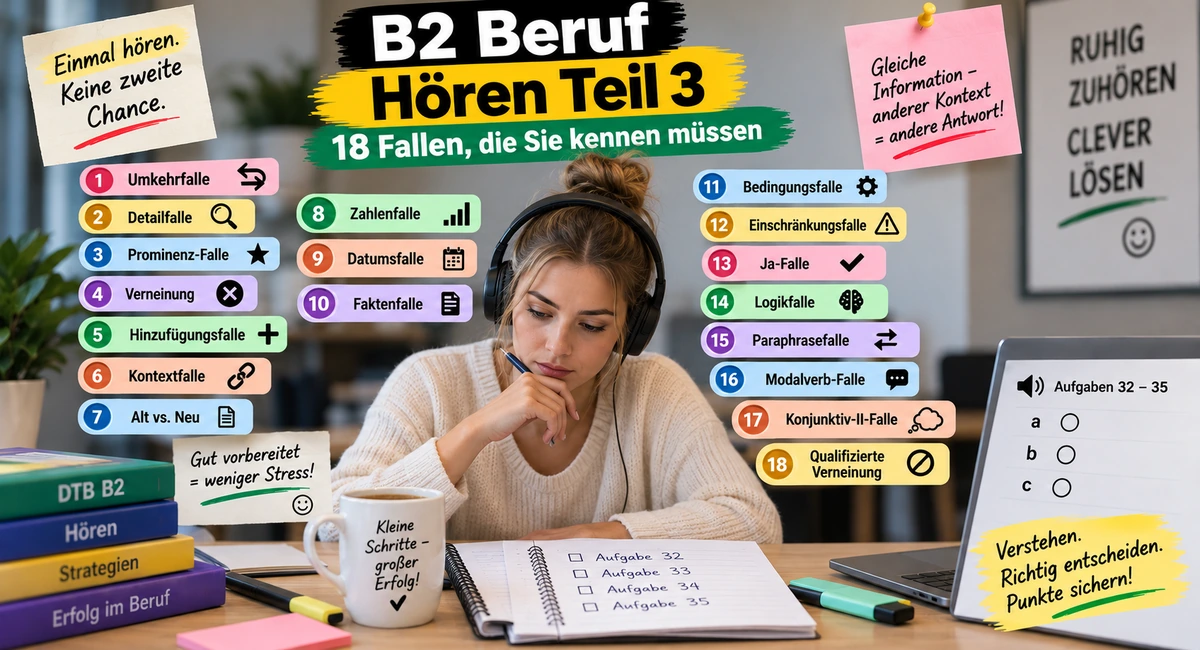
In the Goethe B2 format, the audio recordings have more complex content. These may be interviews, radio programmes or discussions in which information is presented with subsections and additional details. Some of the tasks are designed for a single listening.
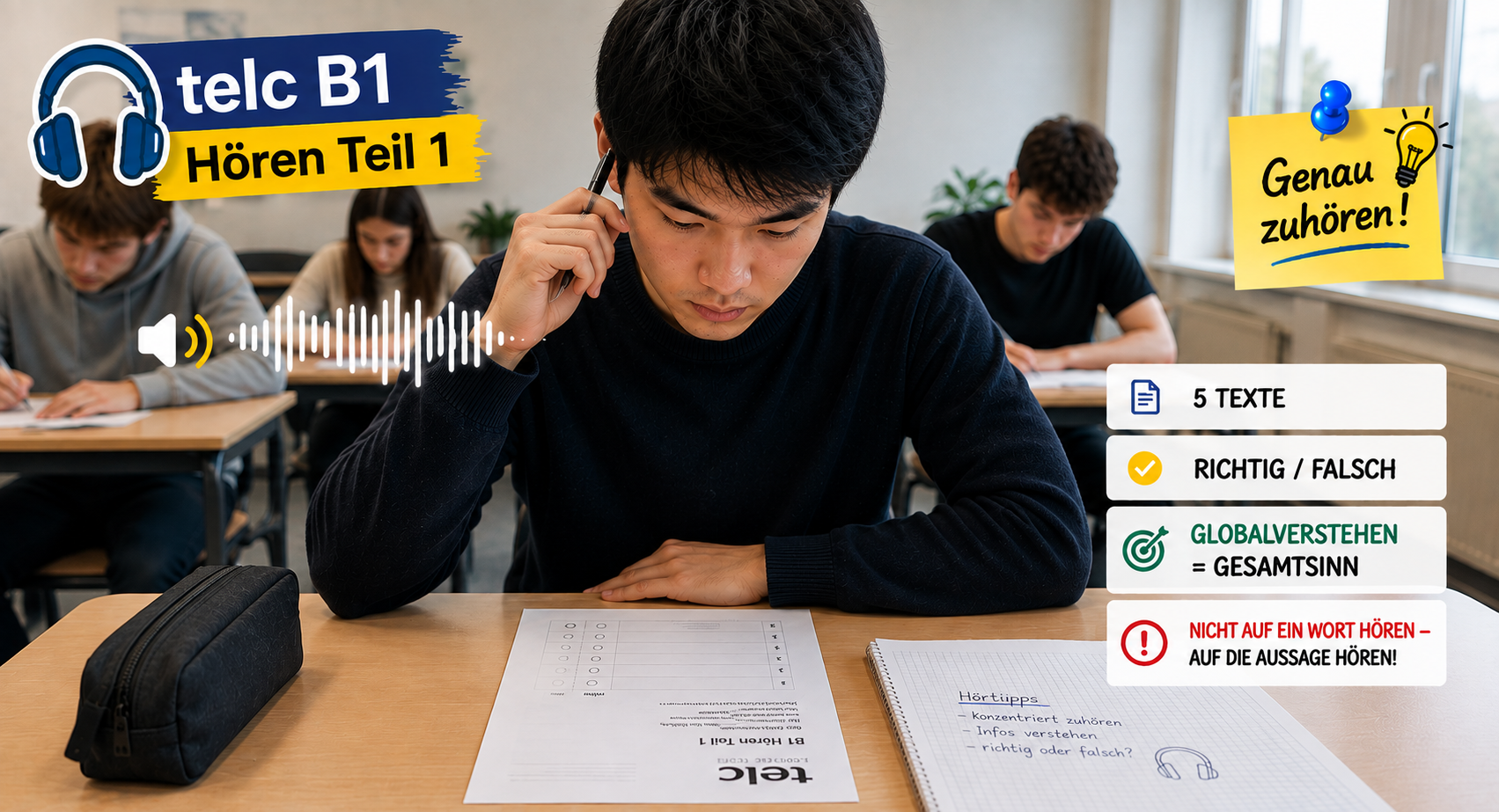
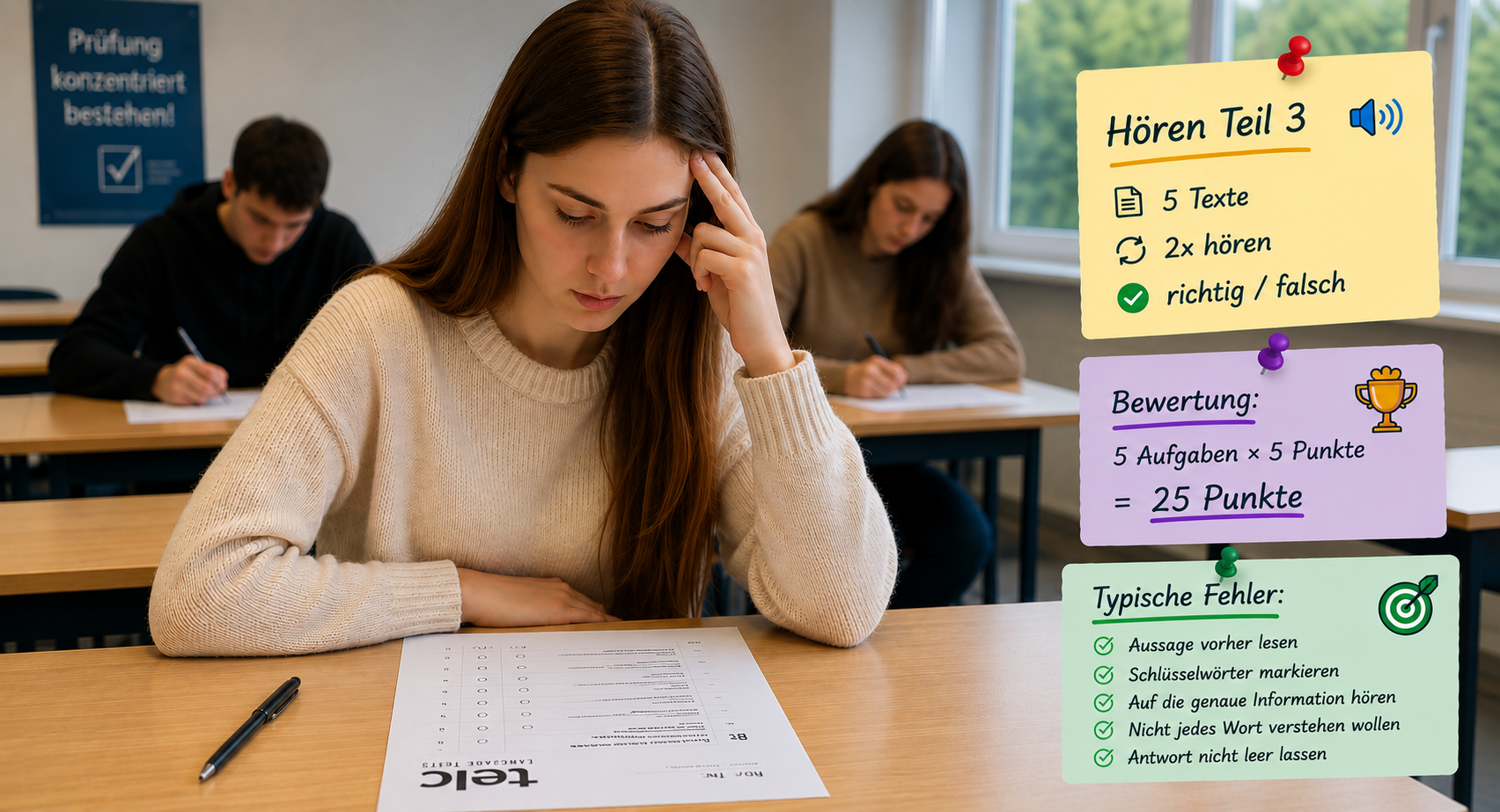
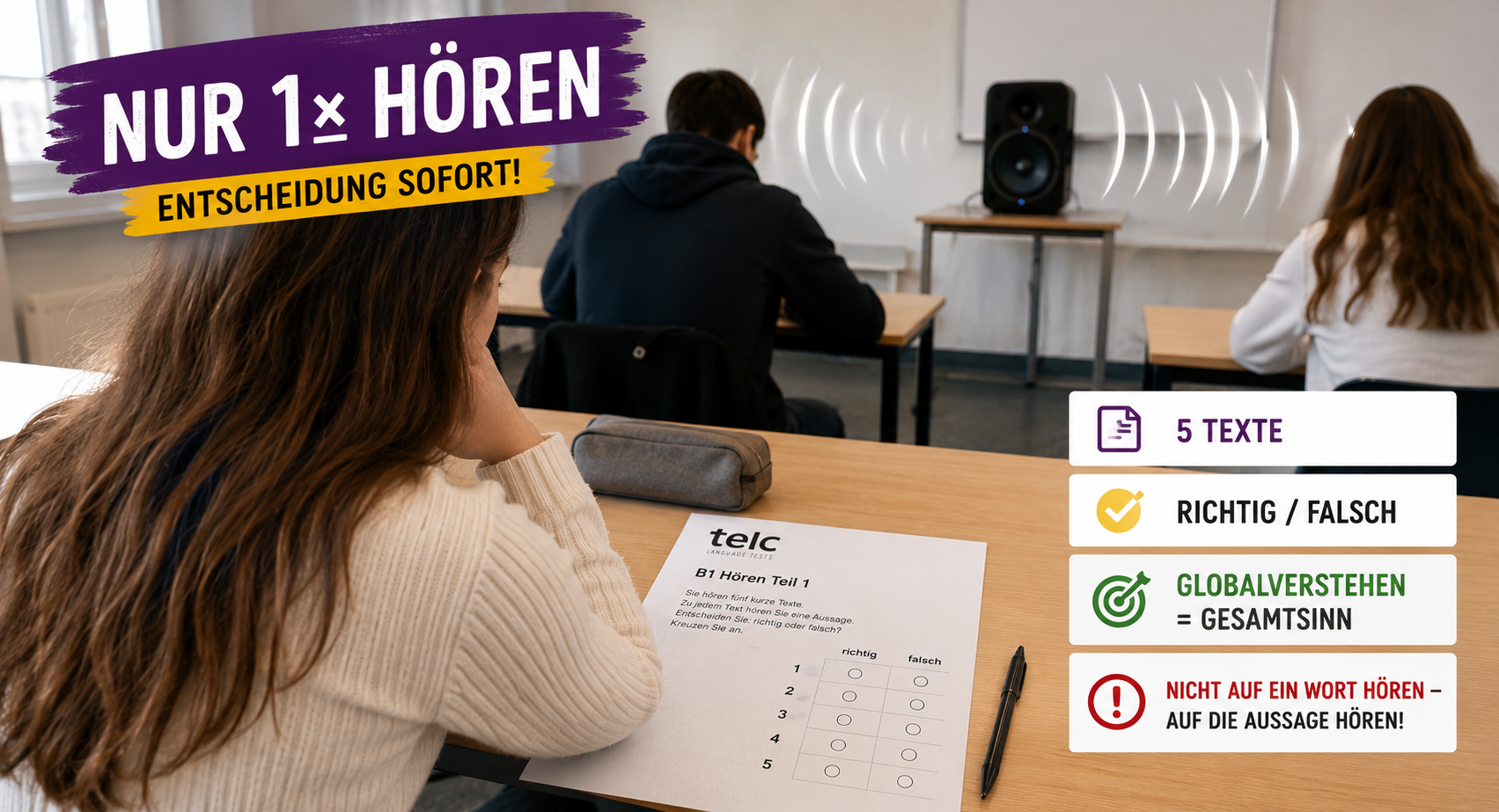
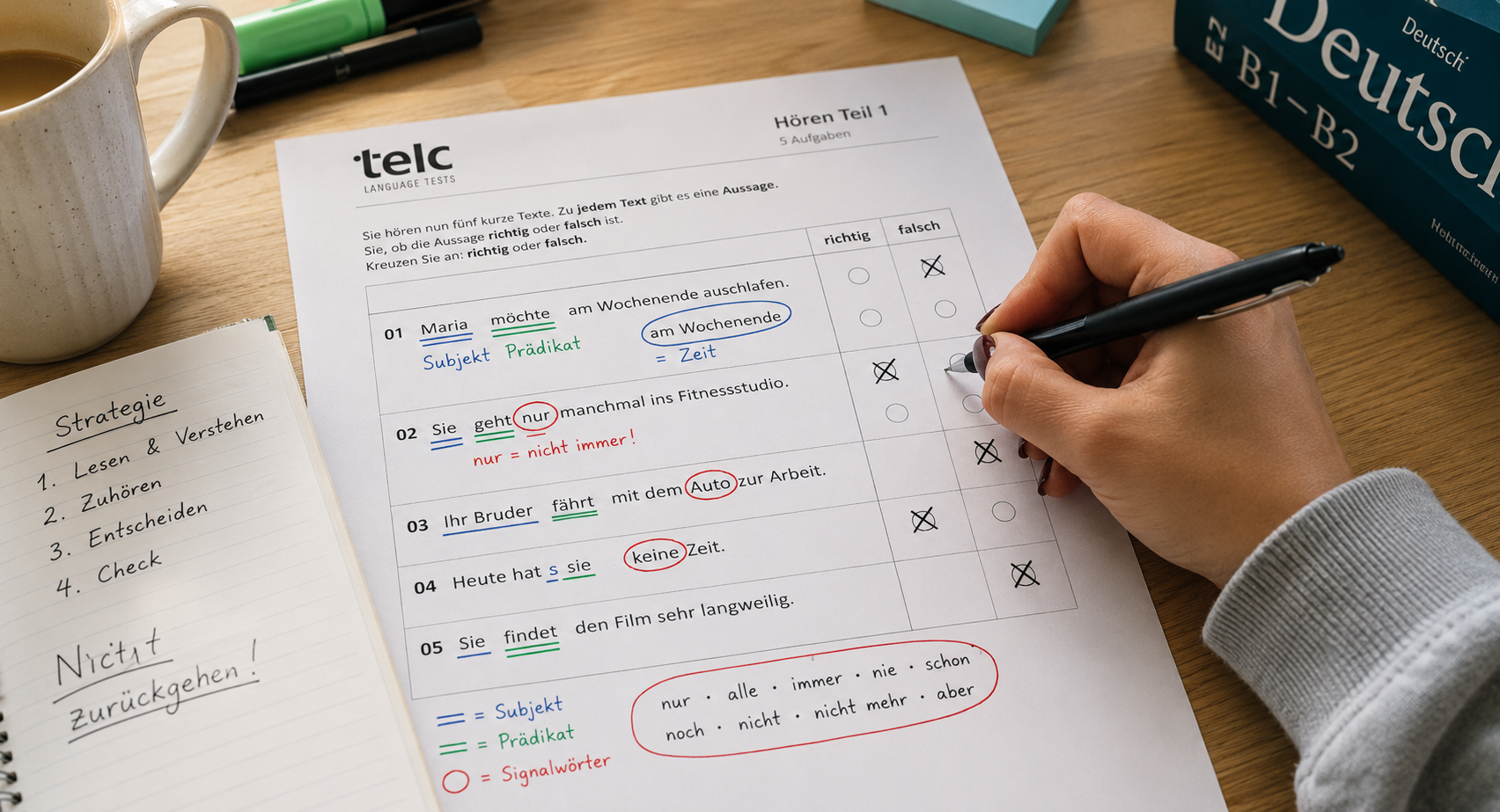
In the Telc B2 exam, the listening comprehension is more predictable. The recordings are clearly structured; they are generally dialogues or short monologues with a specific communicative goal. In telc B2, the listening texts are generally only played once, which represents an additional challenge compared to lower levels.
| Parameter | Goethe B2 | Telc B2 |
|---|---|---|
| Number of tasks | 4 parts, comprising tasks for understanding the main message, details, viewpoints and instructions. | 3 parts, each containing questions on comprehension of what was heard |
| Duration (minutes) | 40 | 20 (Listening section within the written block) |
| Assessment | Assessed as a separate module | Part of the written exam, assessed together with other tasks |
| Typical level of difficulty | Higher, contains more complex audio files, conversations, interviews | Medium, contains more clearly structured audio recordings for practical communication |
Writing — text types and assessment
The written part is one of the most important for the overall result, as this is where the difference in the concept of the exams becomes most apparent.
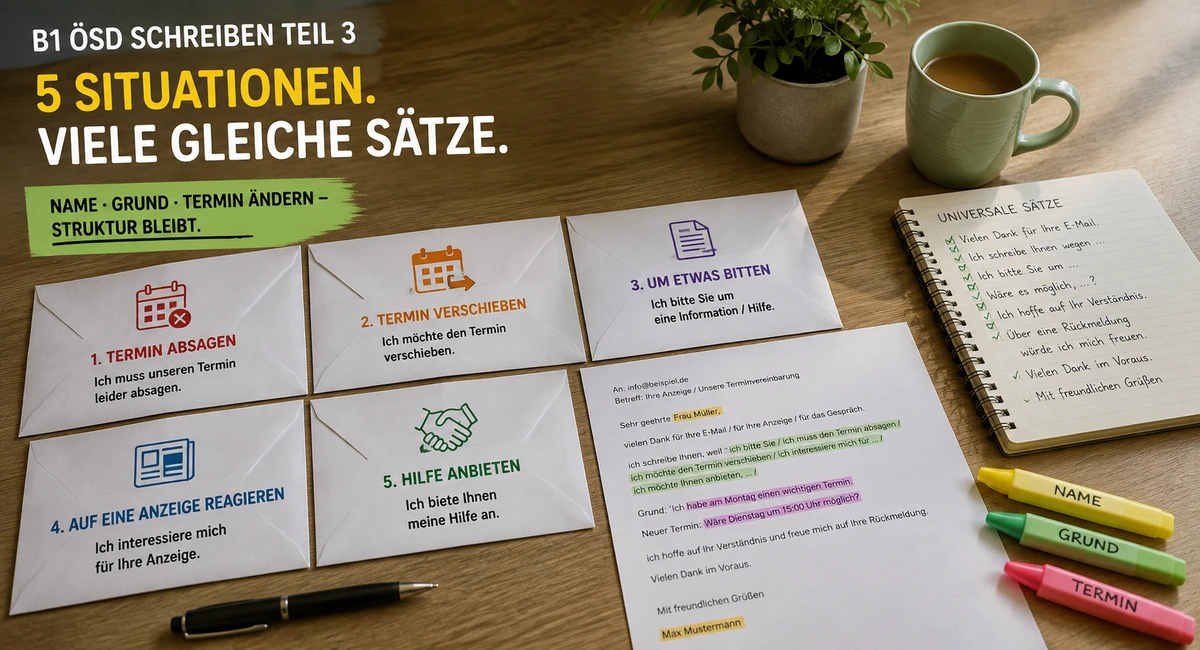
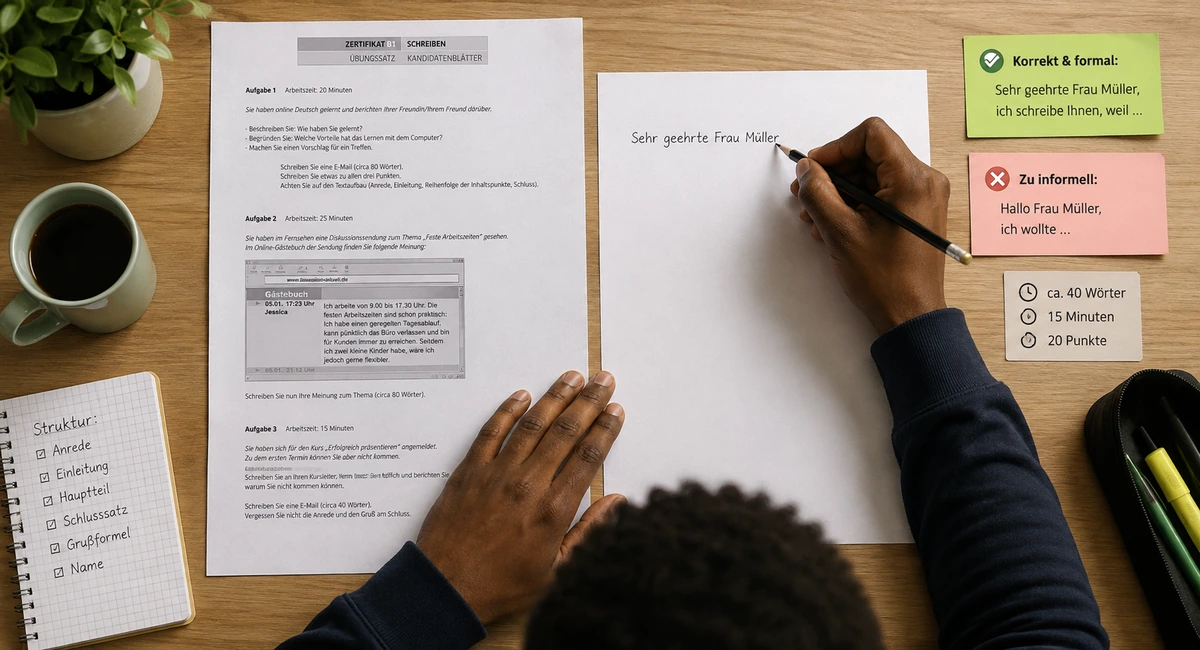
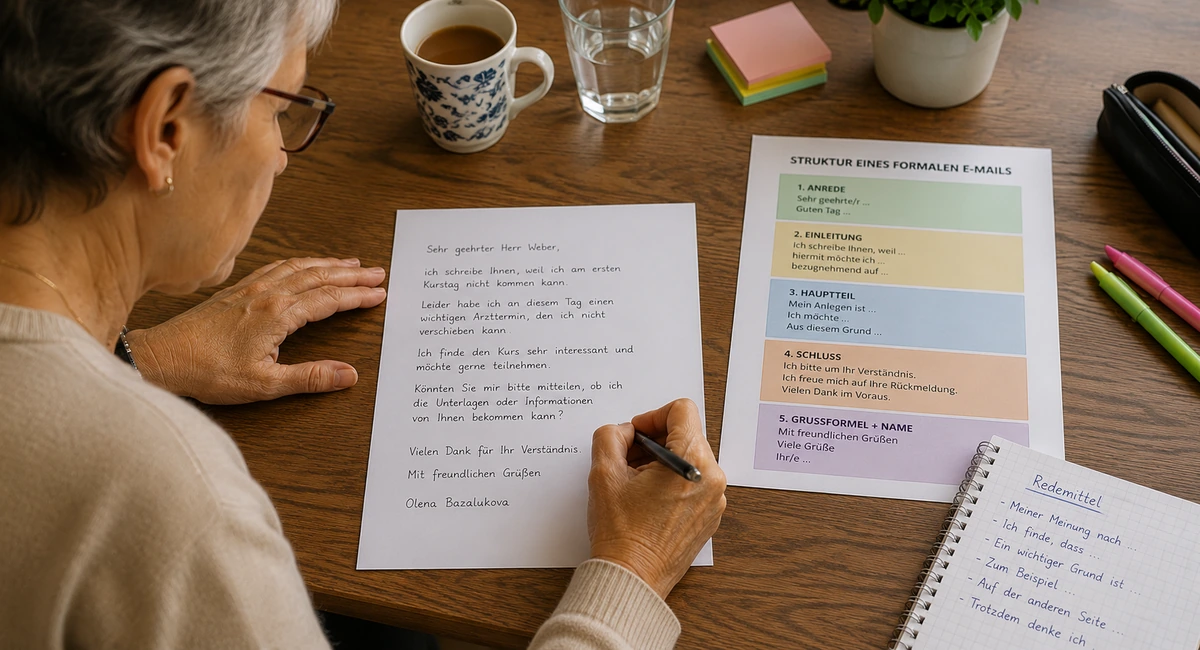
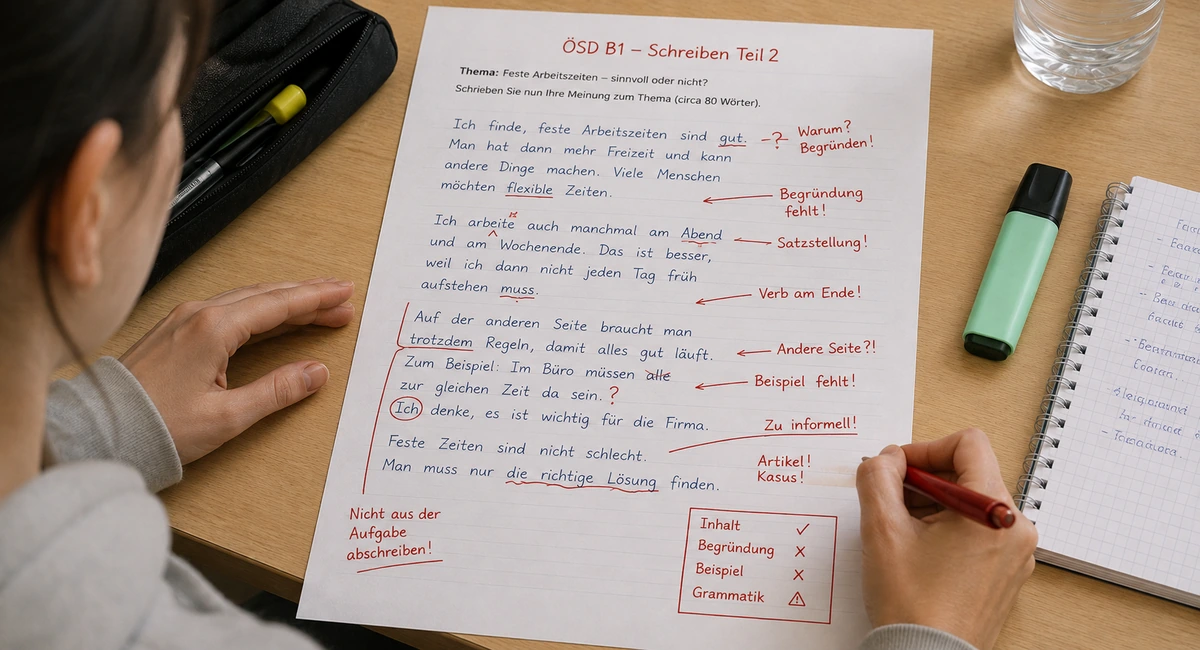
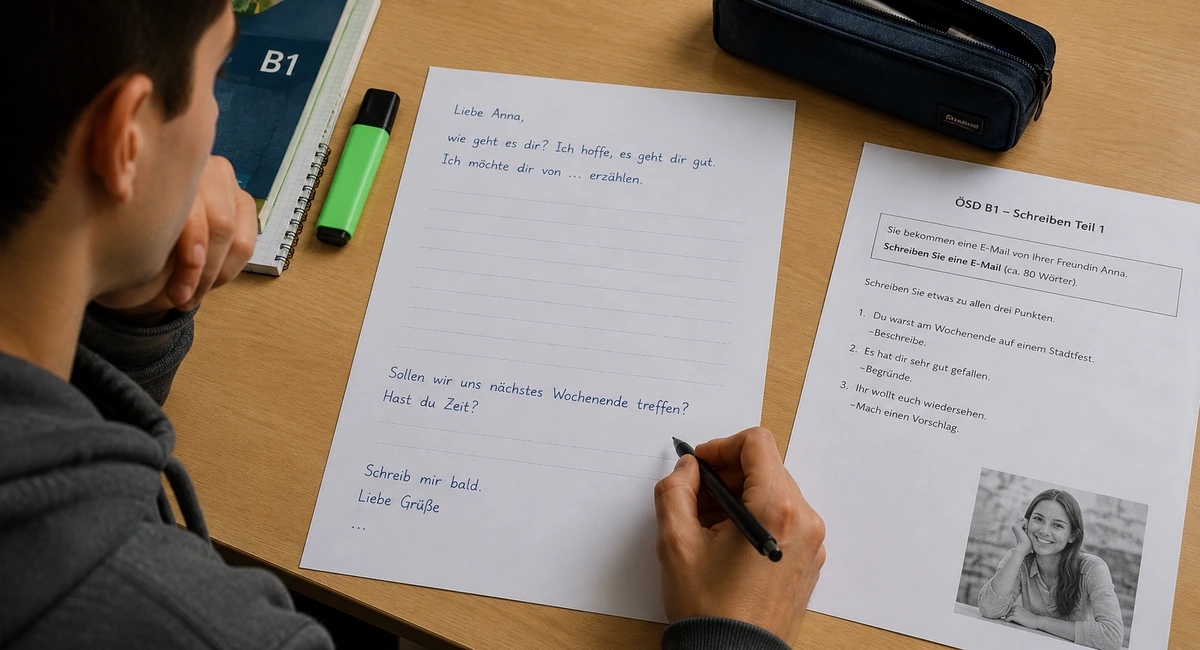
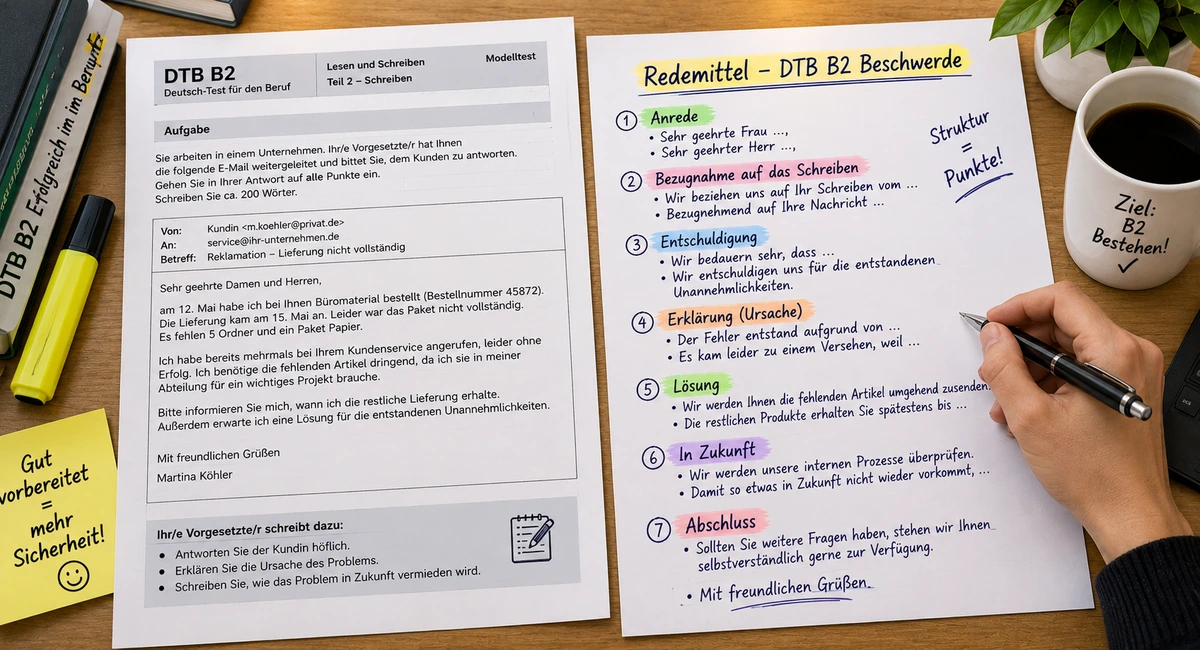
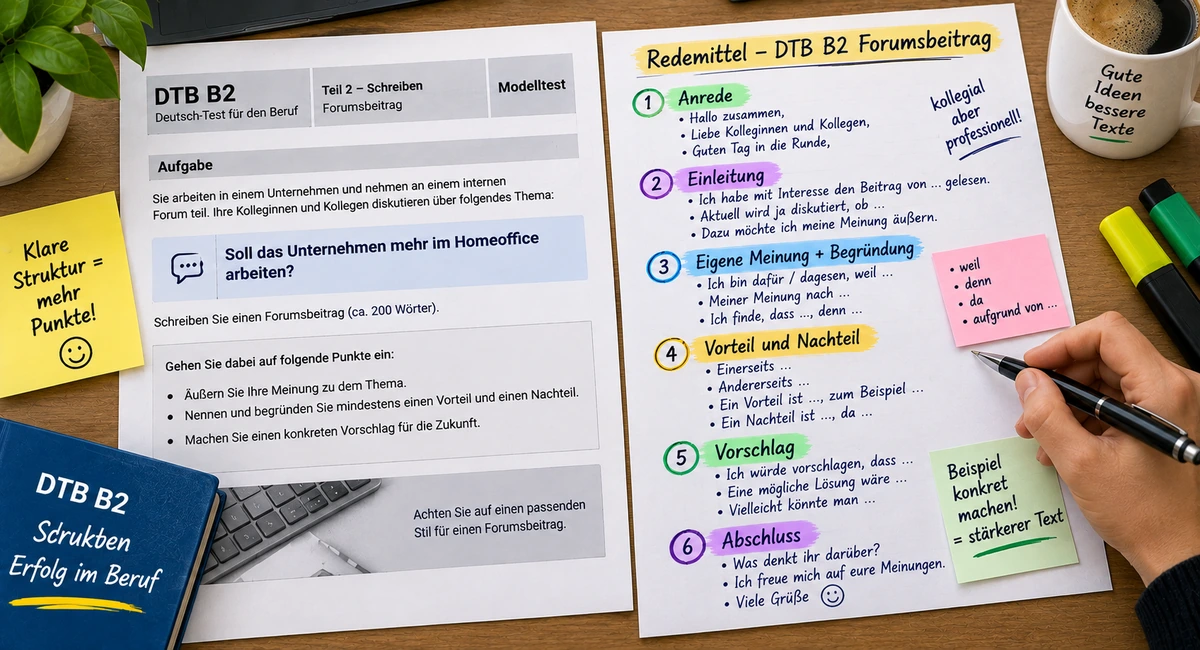
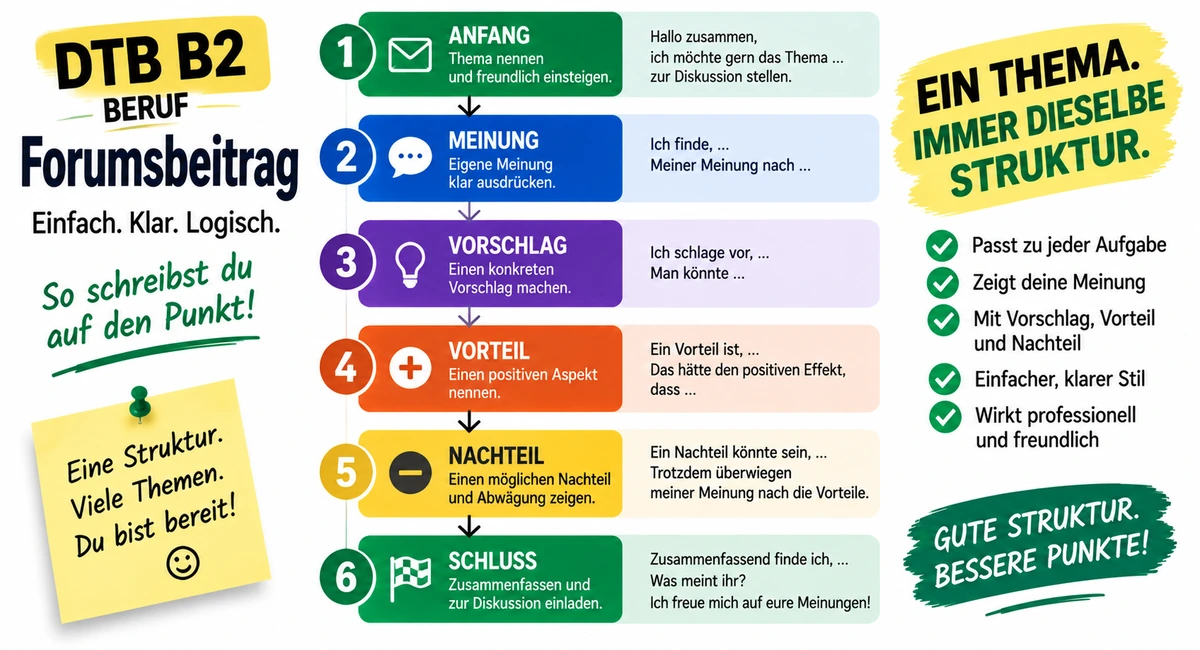
In the Goethe-Zertifikat B2, the Writing module consists of two parts: a forum post and a formal email. Among other things, the module assesses completeness of content, logical structure, linguistic correctness and coherence.
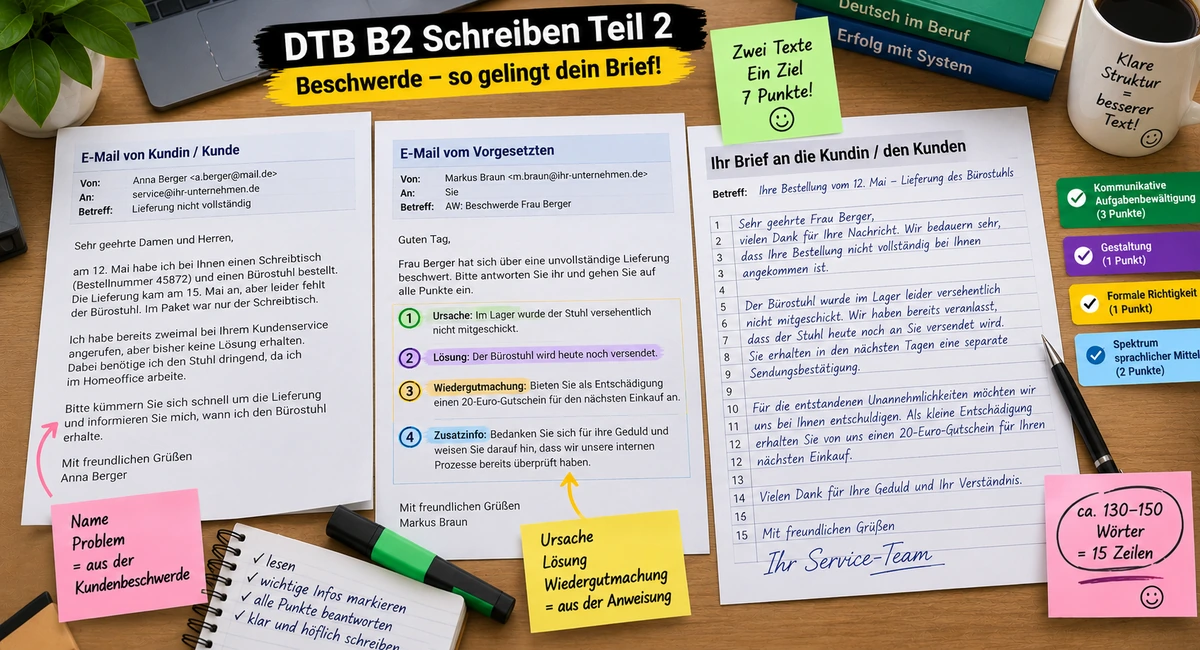
In telc Deutsch B2, the written part of the exam contains one written task with a processing time of 30 minutes within the overall written exam block.
| Parameter | Goethe B2 | Telc B2 |
|---|---|---|
| Number of tasks | 2 writing tasks (forum post and formal email) | 1 writing task |
| Duration (minutes) | 75 | 30 |
| Assessment | Assessed as a separate module | Assessed within the written part (together with reading, language elements and listening comprehension) |
| Typical level of difficulty | High, with emphasis on logic, argumentation and structuring | Medium, oriented towards practical situations |
Speaking — interaction and presentation
The oral part takes place in pairs in both exams, but the tasks and assessment criteria differ considerably.
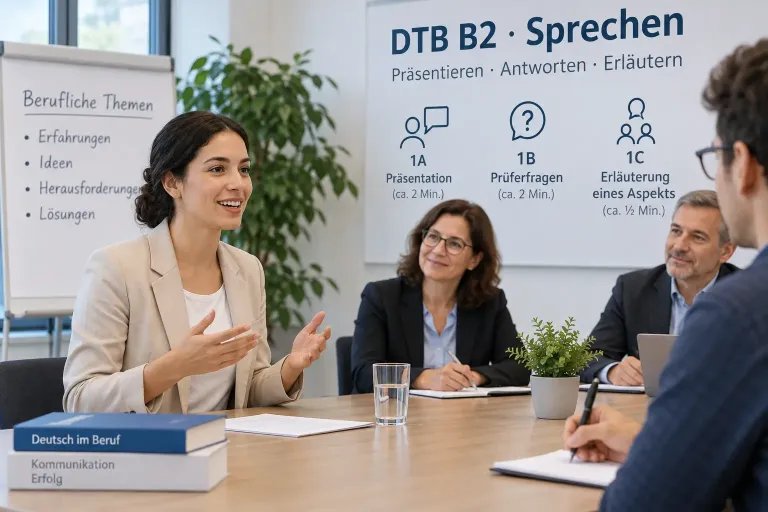
In the structure of Goethe B2, speaking includes a presentation component. The candidate must briefly outline the topic, build their utterances logically and justify their position. The second part is a discussion with the partner, in which the ability to respond to arguments is assessed.
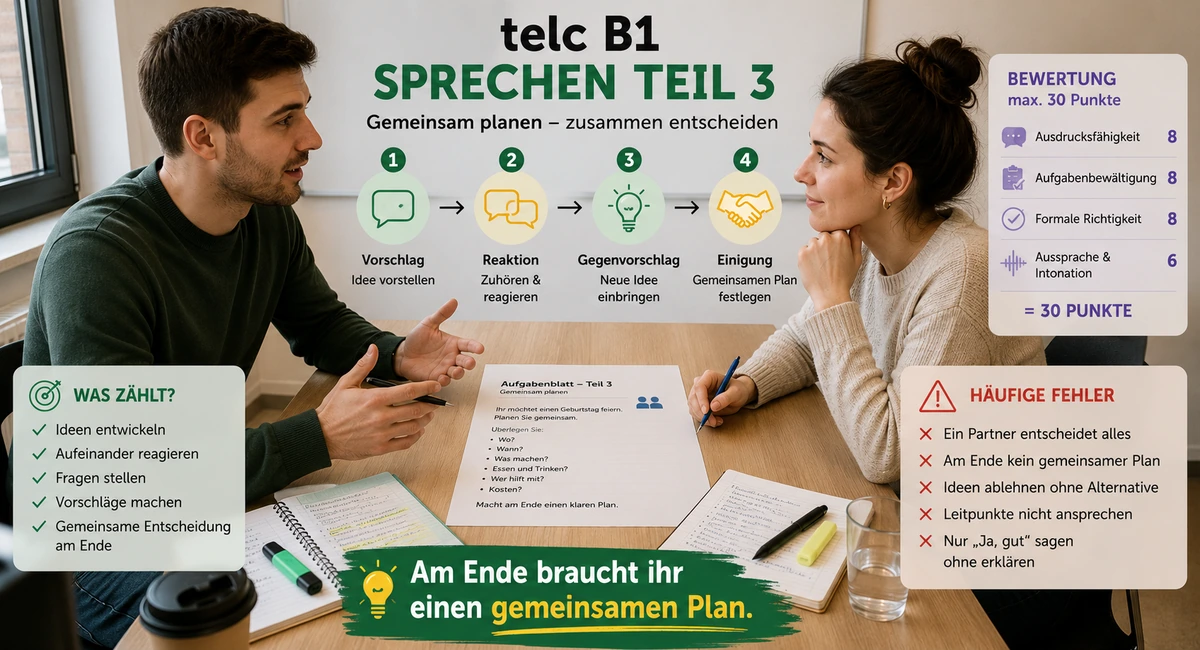
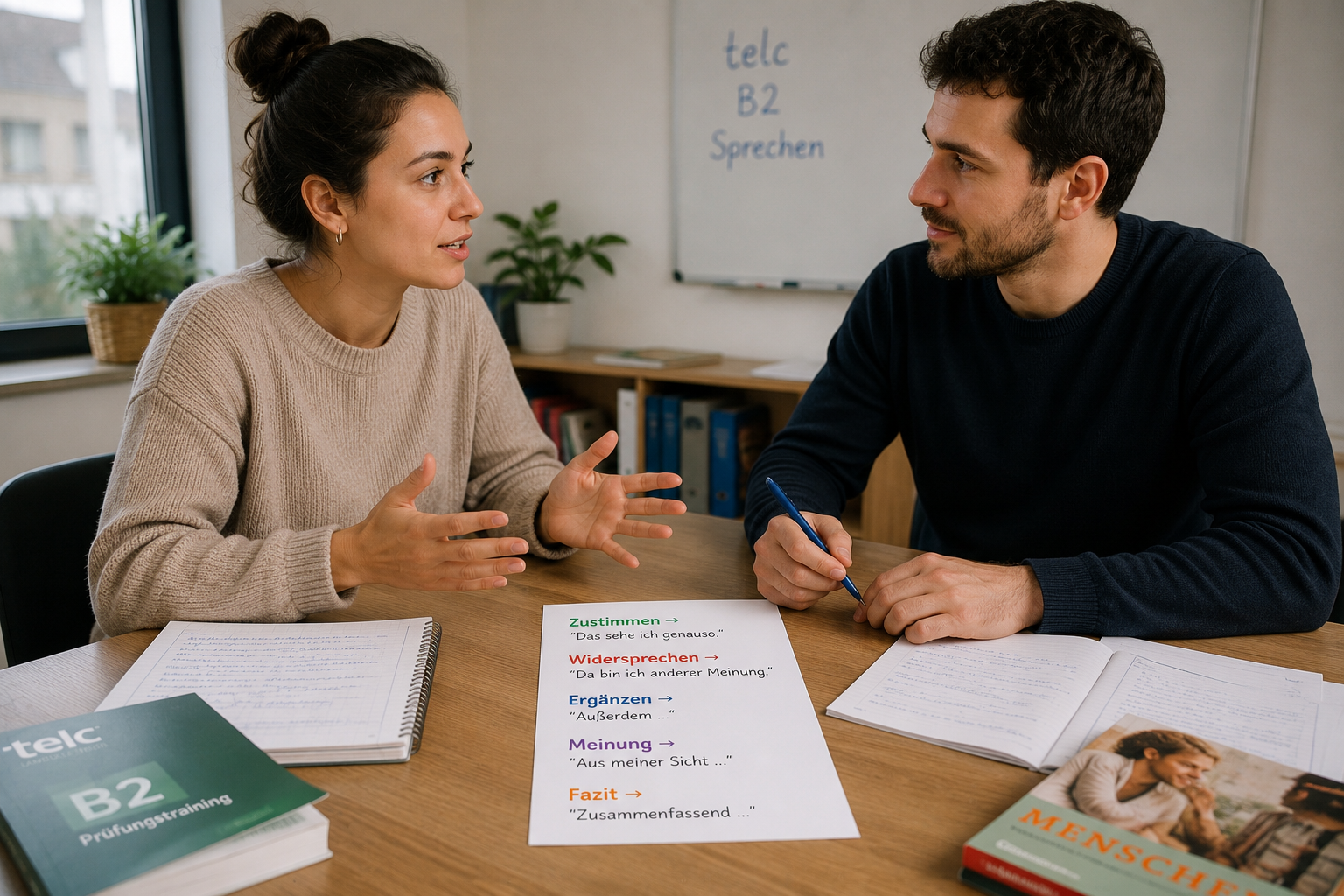
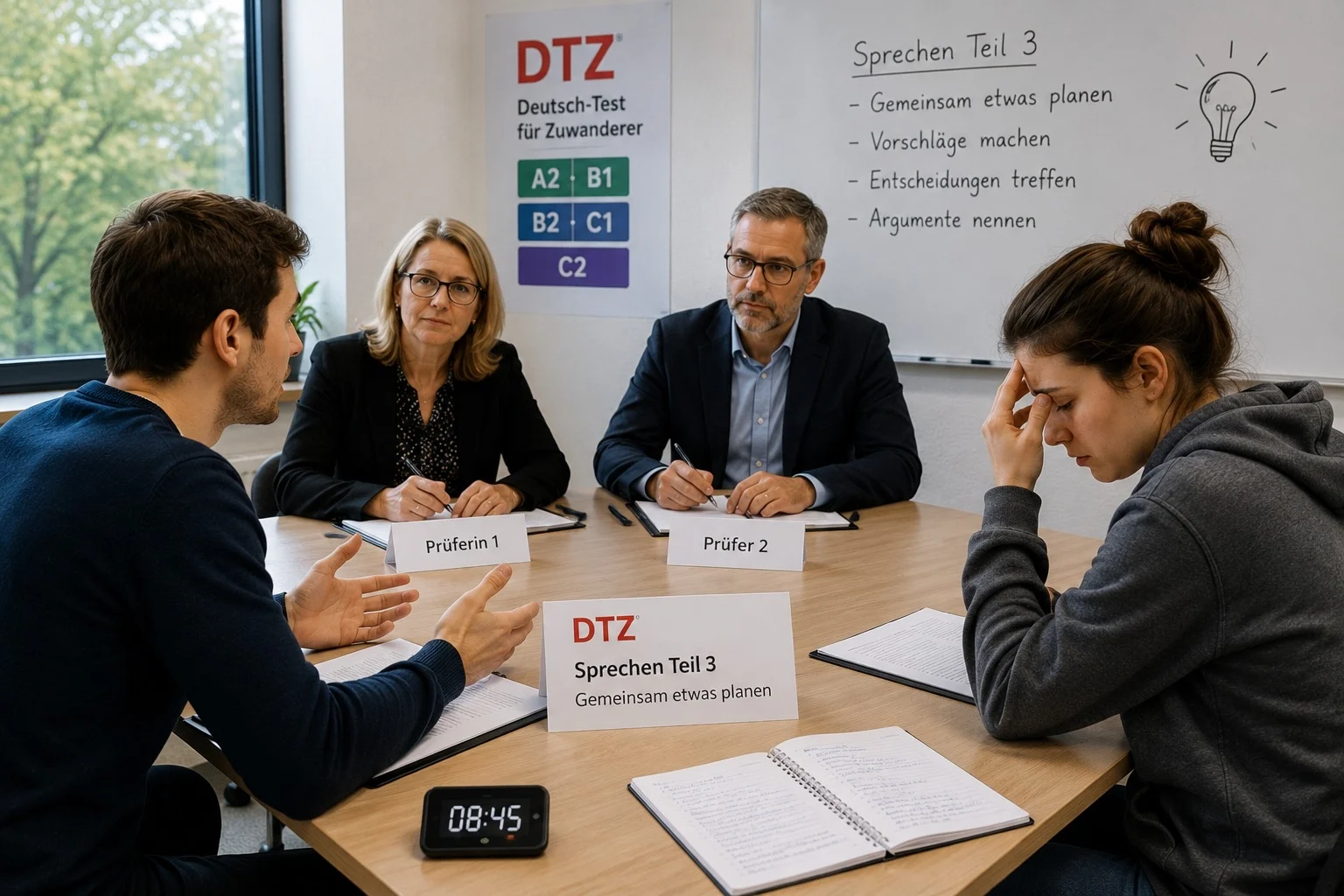
In the Telc B2 exam, the oral part is more interactive. The emphasis is on jointly discussing a situation, reaching a decision and achieving an agreement. The presentation component is minimal or absent entirely.
| Parameter | Goethe B2 | Telc B2 |
|---|---|---|
| Number of tasks | 2 tasks — short presentation and discussion with a partner | 3 interconnected parts (presentation, discussion, joint planning) |
| Duration (minutes) | 15 | 20 preparation + 15 conversation |
| Assessment | Assessed as a separate module | Assessed as a separate module |
| Typical level of difficulty | High, with emphasis on argumentation | Medium, with emphasis on communication and interaction |
Level of difficulty — which B2 exam is harder?
The level of difficulty of the Telc or Goethe exams for study or work depends on the task format, the requirements placed on candidates and the type of assessment. Both certificates correspond to the B2 standard of the CEFR, but test different aspects of language competence. Goethe focuses on analytical thinking and academic writing, while Telc tests the practical use of language in life and work situations.
This distinction is a simplified assessment, not an official position of the exam providers.
Objective differences (structure, logic of tasks)
The telc Deutsch B2 exam consists of a written and an oral part. The written part comprises reading, language elements, listening and writing; the oral part is conducted separately. The Goethe-Zertifikat B2 consists of four independent modules that can be taken individually or in combination.
Goethe B2 assesses each module separately, so poor results in one part can lead to an insufficient overall score. The tasks are designed to test a deep understanding of texts, the ability to formulate arguments and conduct a structured monologue. To pass the Goethe B2 exam, careful and regular practice is required. For this purpose, it is recommended to use the free materials provided by the Deutsch Vorbereitung service.
Recognition in Germany and internationally
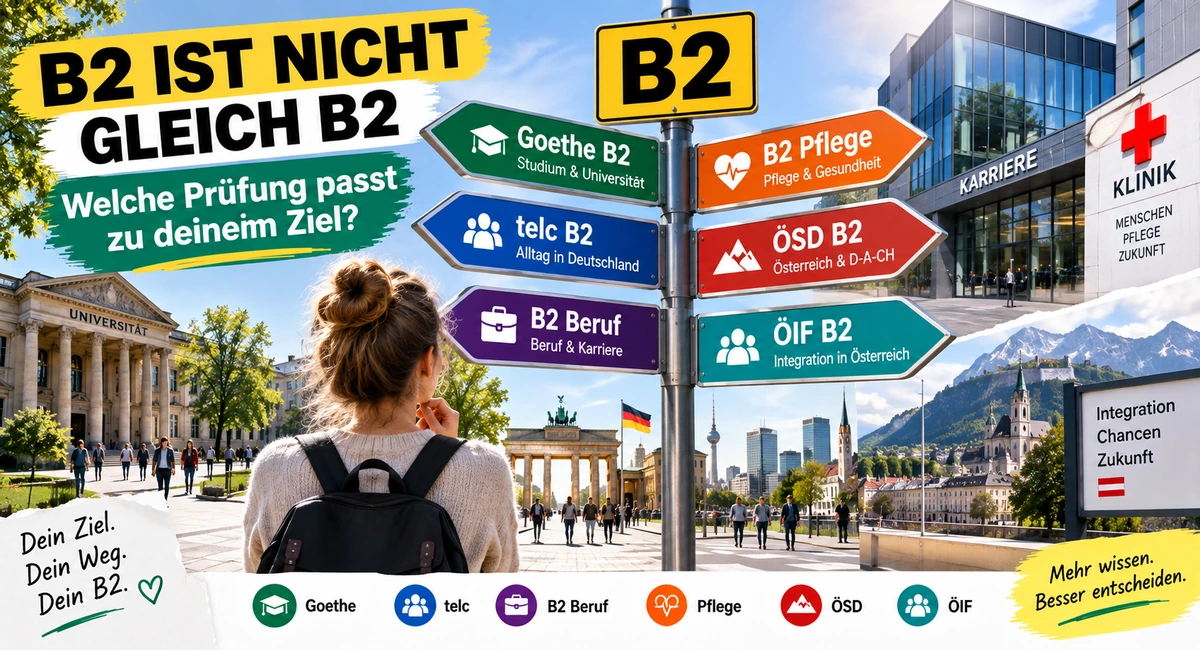
Both B2 certificates are internationally recognised, but differ in their areas of application. Goethe B2 is generally required for academic programmes and universities, while Telc B2 is more frequently chosen for professional activities and everyday communication.
Studies (universities, preparatory courses)
Both B2 certificates are internationally recognised. The Goethe-Institut points out that the Goethe-Zertifikat B2 may be recognised for study at some universities and higher education institutions, but the specific requirements depend on the respective institution and degree programme. telc, in turn, explicitly emphasises that its certificates are internationally recognised by schools, universities, employers and authorities.
Profession and employers
For job-seeking purposes, both certificates confirm B2 level, which is sufficient for employment in Germany and EU countries. Employers tend to pay more attention to practical competence than just the name of the certificate.
Visa and naturalisation
Both certificates are suitable for immigration purposes, obtaining a visa and naturalisation, but you should always check the requirements of the relevant authority or programme.
| Area | Goethe B2 | Telc B2 | Notes |
|---|---|---|---|
| Universities | Yes | Yes | The requirements depend on the respective university and the specific degree programme; the acceptance of the certificate should always be checked individually. |
| Professional career | Yes | Yes | Both certificates are recognised by employers |
| Visa/naturalisation | Yes | Yes | Check the requirements of the relevant authority/institution |
Costs, dates and examination centres
The costs for Goethe B2 and Telc B2 are set by the examination centres, but are based on the official rates of the provider organisations. For this reason, prices may vary depending on the country and examination centre.
The examination fees are set by the respective examination centres and may vary depending on the country and provider. The costs must always be checked directly with the examination centre, as they are influenced by the examination location, administrative costs and the examination date.
Worldwide availability
Goethe has a wide network of centres worldwide, which ensures regular dates and a wide choice of locations. Telc B2 is also offered in many countries. However, in some regions the number of examination centres and available examination dates is limited.
Can individual modules be retaken?
The Goethe-Zertifikat B2 can be taken module by module or in combination. telc Deutsch B2 is also available in the partial exam format; in the telc FAQ it is also pointed out that the possibility of repeating the entire exam or only part of it depends on the respective exam level.
Which exam is suitable for whom?
The choice between Goethe B2 and Telc B2 depends on your goal.
For studies
- If you wish to apply for a degree programme or a preparatory course, you should choose the certificate that is accepted by the respective university or educational institution. Both the Goethe-Zertifikat B2 and telc Deutsch B2 may be recognised, but the final requirements always depend on the university and the specific study programme.
For work
- For professional communication in Germany, the EU or international companies → Telc B2.
- If the position requires a high level of written and presentational skills and participation in academic projects → Goethe B2.
For immigration or legalisation of documents
- Both certificates are accepted for obtaining a visa or naturalisation.
- It is always necessary to check the requirements of the relevant authority or programme.
The structure helps you to clearly determine which certificate is most suitable for you.
















There are no comments for this article. Leave your comment